Insulated vs. Non-Insulated Garage Doors
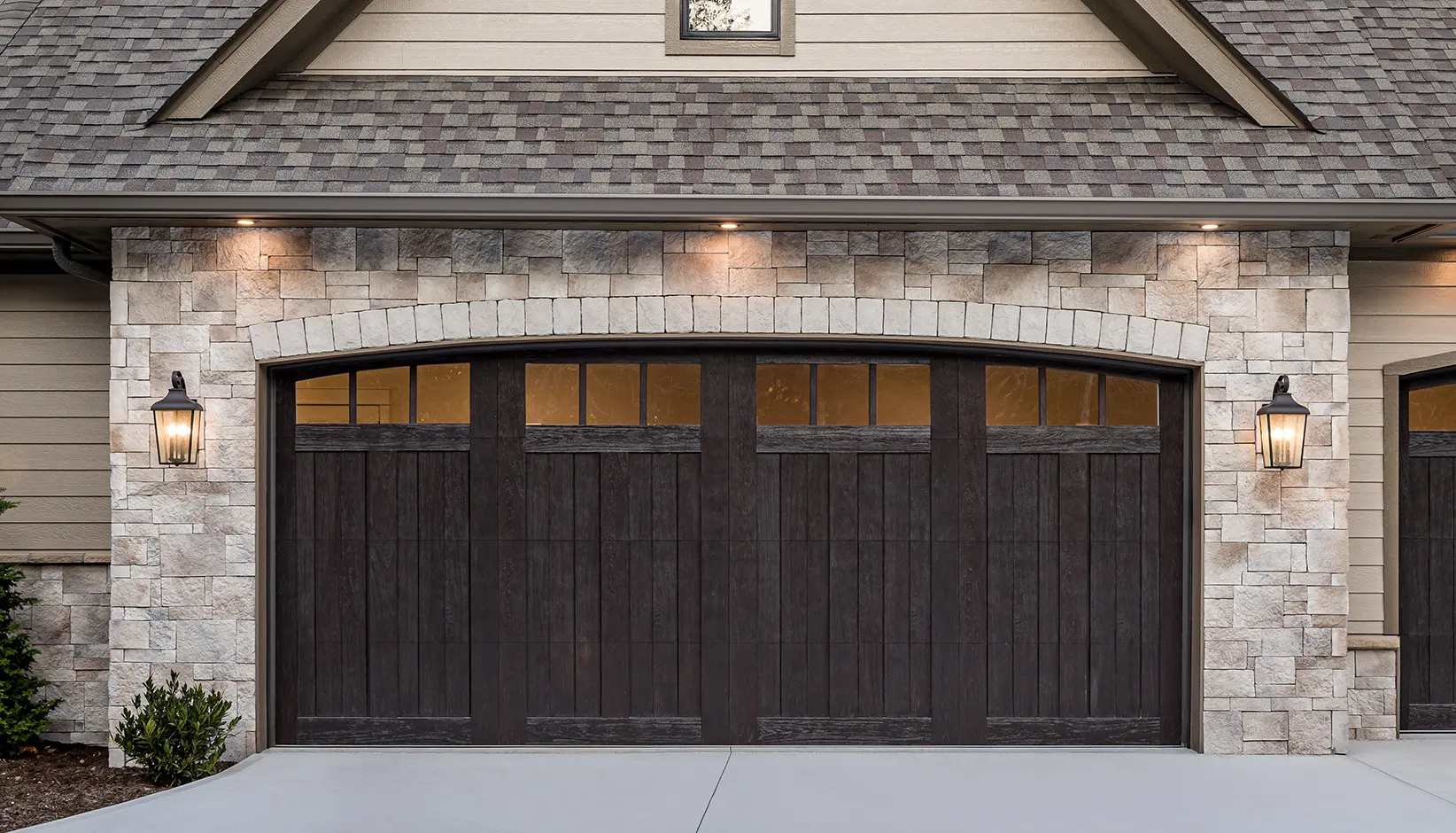
An insulated garage door contains a layer of polystyrene or polyurethane foam between two steel skins, delivering R-values from R-6 to R-20+ depending on the insulation type. A non-insulated garage door is a single layer of steel or aluminum with no thermal barrier and an R-value near zero. Insulated doors offer better energy efficiency, quieter operation, and improved dent resistance, though they cost more upfront.
Which is why stepping into your garage can sometimes feel like crossing into a different climate zone—sweltering in summer, bone-chilling in winter. These extremes affect everything from how you use the space to what you pay on your energy bill. This guide breaks down the numbers behind that choice—R-value, decibels, and dent resistance—so you can compare garage door insulation options and pick the best fit for your home.
What is an Insulated Garage Dooor?
An insulated garage door is built with two or more layers (usually steel, aluminum, or wood) that sandwich a layer of insulation material such as polystyrene or polyurethane. This insulation slows heat transfer, helping block out extreme temperatures and dampen street noise. The result is a sturdier, quieter, and more comfortable garage year-round.
When deciding between an insulated and non-insulated garage door, it’s important to know the R-value: a measure of how well a material resists heat flow. The higher the R-value, the more effective the door is at keeping conditioned—or unconditioned—air where it belongs. Non-insulated doors sit near R-0, standard polystyrene doors typically fall between R-6 and R-9, and Clopay's proprietary Intellicore® polyurethane insulation reaches as high as R-20.4 in select models.
What Is a Non-Insulated Garage Door?
A non-insulated garage door is constructed from a single layer of material (often steel, aluminum, or wood) without any added insulation. This lack of a thermal barrier means heat and cold pass through with little resistance, making the garage's temperature much more dependent on what's happening outside. For homeowners who mainly use the garage for parking and don't mind temperature swings, this door can get the job done. But in terms of energy efficiency and comfort, the R-0 to R-2 range of a non-insulated door is easy to feel.
What Are the Benefits of an Insulated Garage Door?
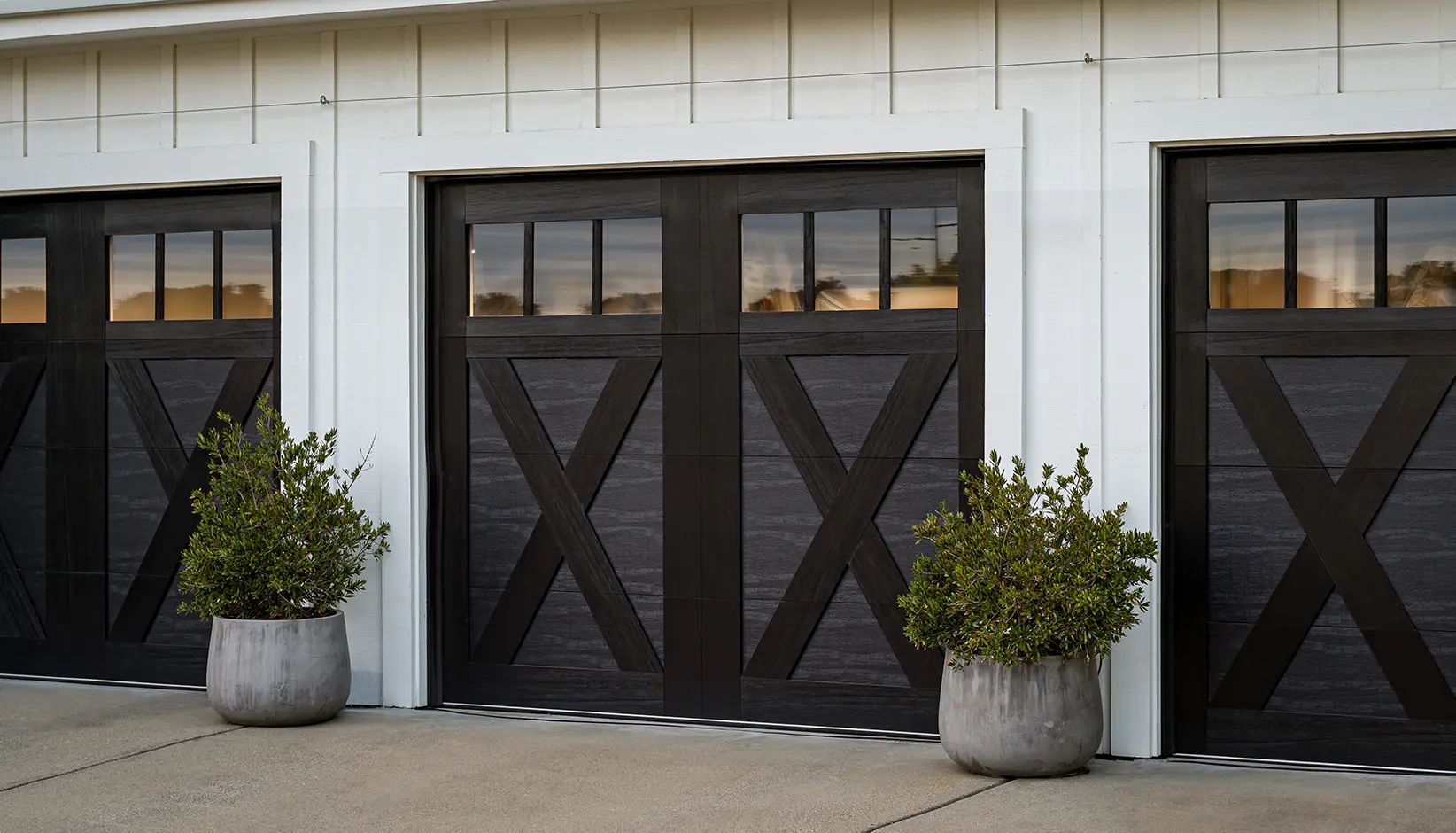
Canyon Ridge® 4-Layer garage door in Design 21 with REC13 windows in Black
In addition to everyday comfort, choosing an insulated garage door can influence your home's utility costs, daily convenience, and even long-term upkeep. Some of the benefits include:
Enhanced Energy Efficiency
- Insulation works as a buffer, reducing heat transfer between indoors and outdoors.
- Helps keep the garage warmer in winter and cooler in summer.
- Relieves the strain on heating and cooling systems, which helps attached garages in particular.
- Can lead to noticeable energy bill savings, making an energy-efficient garage door a smart investment over time.
Improved Temperature Control
- Maintains a more consistent environment inside the garage.
- Important if the space is used as a workshop, home gym, or storage for temperature-sensitive items such as paint, tools, or electronics.
- Can helps extend the lifespan of stored belongings.
Quieter Operation
- Insulation can dampen sound from both outside the garage and inside it.
Increased Durability
- Insulation reinforces the door, making it more resistant to dents, dings, and damage from everyday use.
- Less susceptible to warping or sagging over time.
- Often results in a longer lifespan and fewer repairs.
Are There Downsides to Insulated Garage Doors?
While insulated garage doors offer real advantages, a few trade-offs are worth weighing before you buy.
Higher Upfront Cost
- Insulated garage doors typically come with a higher initial investment than non-insulated doors.
- The extra cost can be a deterrent for homeowners prioritizing a lower upfront expense.
Increased Weight
- Adding insulation increases the overall weight of the garage door.
- Heavier doors may require a more powerful garage door opener to operate.
- The extra weight can contribute to increased wear on the opener and other moving parts.
When Does a Non-Insulated Garage Door Make Sense?
For homeowners in mild climates, or those who use their garage strictly for parking, a non-insulated door offers several practical advantages, including:
Lower Upfront Cost
- Non-insulated garage doors are generally more affordable, which is appealing for homeowners on a budget.
- Ideal for detached garages or spaces where controlling the temperature isn't a priority.
Lighter Weight
- The single-layer construction makes these doors lighter than insulated versions.
- Reduced weight puts less strain on garage door openers, hardware, and tracks.
- Easier to lift by hand during manual operation, such as during a power outage.
Simpler Construction and Maintenance
- Fewer parts and no insulation to maintain or repair.
- Repairs tend to be simpler and faster, with replacement parts easier to source.
- Lower long-term maintenance requirements make them a good fit for those who want minimal upkeep.
Disadvantages of Non-Insulated Garage Doors
Choosing a non-insulated door may make sense for certain situations, but it's important to consider the trade-offs before deciding, such as:
Poor Energy Efficiency
- Lack of garage door insulation allows significant heat transfer between indoor and outdoor environments.
- The garage becomes hot in summer and cold in winter, especially in areas with extreme temperatures.
- For attached garages, this inefficiency can drive up heating and cooling costs as garage temperatures affect adjacent living spaces.
Limited Temperature Control
- Non-insulated garage doors do little to protect the garage from outdoor weather.
- Sudden temperature fluctuations can make the garage uncomfortable and unsuitable for extended use.
- Belongings like paint, electronics, and sporting equipment may become damaged by temperature extremes.
Minimal Noise Reduction
- Single-layer construction provides almost no sound dampening.
- Activity inside the garage is more likely to be heard throughout the home.
- This can be problematic for garages situated near bedrooms or living spaces.
Reduced Durability
- One-layer doors offer less resistance to dents, dings, and other damage.
- More susceptible to everyday bumps, stray sports balls, or hail.
- Tends to result in a shorter lifespan and the need for more frequent garage door maintenance or repairs compared to insulated models.
What Are the Different Types of Garage Door Insulation?
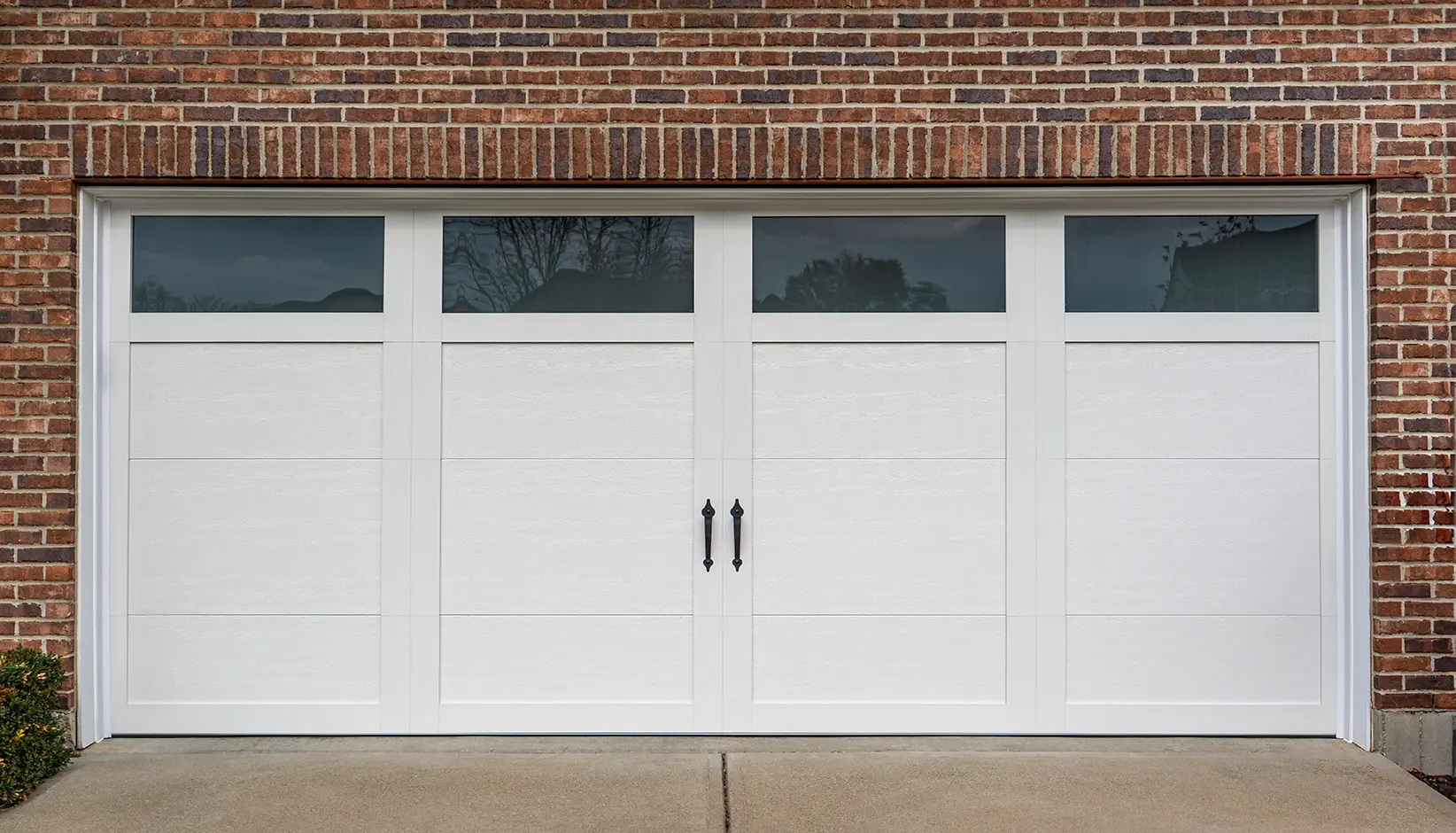
Canyon Ridge® Elements garage door in Design 11 with REC11 windows in White
If you're leaning toward an insulated garage door, the type of insulation makes a big difference in performance, efficiency, and lifespan.
Polystyrene insulation is often a budget-friendly choice, consisting of rigid foam panels fitted between the layers of the door. It improves R-value beyond a non-insulated garage door but isn't as dense as polyurethane. Expect moderate noise reduction, a step up in comfort, and minimal added weight.
Polyurethane insulation is foam-injected between the door's layers and expands to fill every gap. This results in higher R-values, greater structural strength, and maximum noise reduction. Polyurethane also excels at resisting dents and impacts, making it a popular upgrade for those seeking the best insulated garage door performance.
Intellicore® is Clopay's advanced polyurethane-based insulation technology. This dense, microcellular foam fills every inch of the door, delivering industry-leading garage door insulation and R-values up to R-20.4. This gives you superior temperature control, impressive noise reduction, and exceptional durability. While Intellicore® comes at a premium, its performance can deliver both energy savings and a longer-lasting door.
Other Insulation Options
Other materials, like fiberglass or radiant barrier panels, exist but are less common in the garage door market and generally don't match the thermal or structural benefits of polyurethane or Intellicore®.
How Does Intellicore® Insulation Work?
Intellicore® is Clopay's proprietary polyurethane foam insulation, injected between the steel skins of the door during manufacturing.
As the foam is injected, it expands to fill essentially the entire interior cavity of each panel and bonds directly to both steel skins. That bond is what sets it apart from standard polystyrene construction: instead of a rigid foam panel simply resting between two layers of steel, the foam becomes structurally part of the panel, eliminating the small air gaps that form at the seams and edges of standard polystyrene doors. It’s those gaps that cause polystyrene doors to lose R-value.
The result is R-values ranging from R-6.3 up to R-20.4 depending on the door model, thickness, and panel style compared with roughly R-6 to R-9 for typical single-layer polystyrene doors.
Because the foam bonds to the steel rather than sitting loosely between layers, it also adds rigidity to the panel.
Strength and Dent Resistance
Insulated doors also more resistant to physical damage. When polyurethane foam bonds to the steel skins on both sides of a panel, it turns each section into a rigid composite rather than a single sheet of metal. That composite structure distributes the force of an impact across a wider area instead of concentrating it at one dent point.
A standard, non-insulated single-layer steel or aluminum panel (often 25-gauge) offers the least resistance to impact in the lineup, since there's no second layer or bonded foam core to absorb the hit.
In real-world terms, that difference shows up in the situations garage doors typically face: a driveway basketball game, a bumper tap while backing out, hail, or a stray baseball. A single-layer steel panel dents on contact; a three-layer insulated panel with a bonded foam core is far more likely to shrug off the same impact.
Noise Reduction
Noise reduction is one of the most measurable differences between insulated and non-insulated doors.
Polyurethane insulation outperforms polystyrene here because the foam bonds directly to the steel and eliminates the air gaps where sound can pass through. Non-insulated, single-layer doors offer almost no sound dampening.
That gap matters most in attached garages, home gyms, and workshops, and in homes with bedrooms or living space directly above the garage — where every opener cycle and slammed trunk can be heard throughout the house.
Industry Standard vs. Clopay Innovation
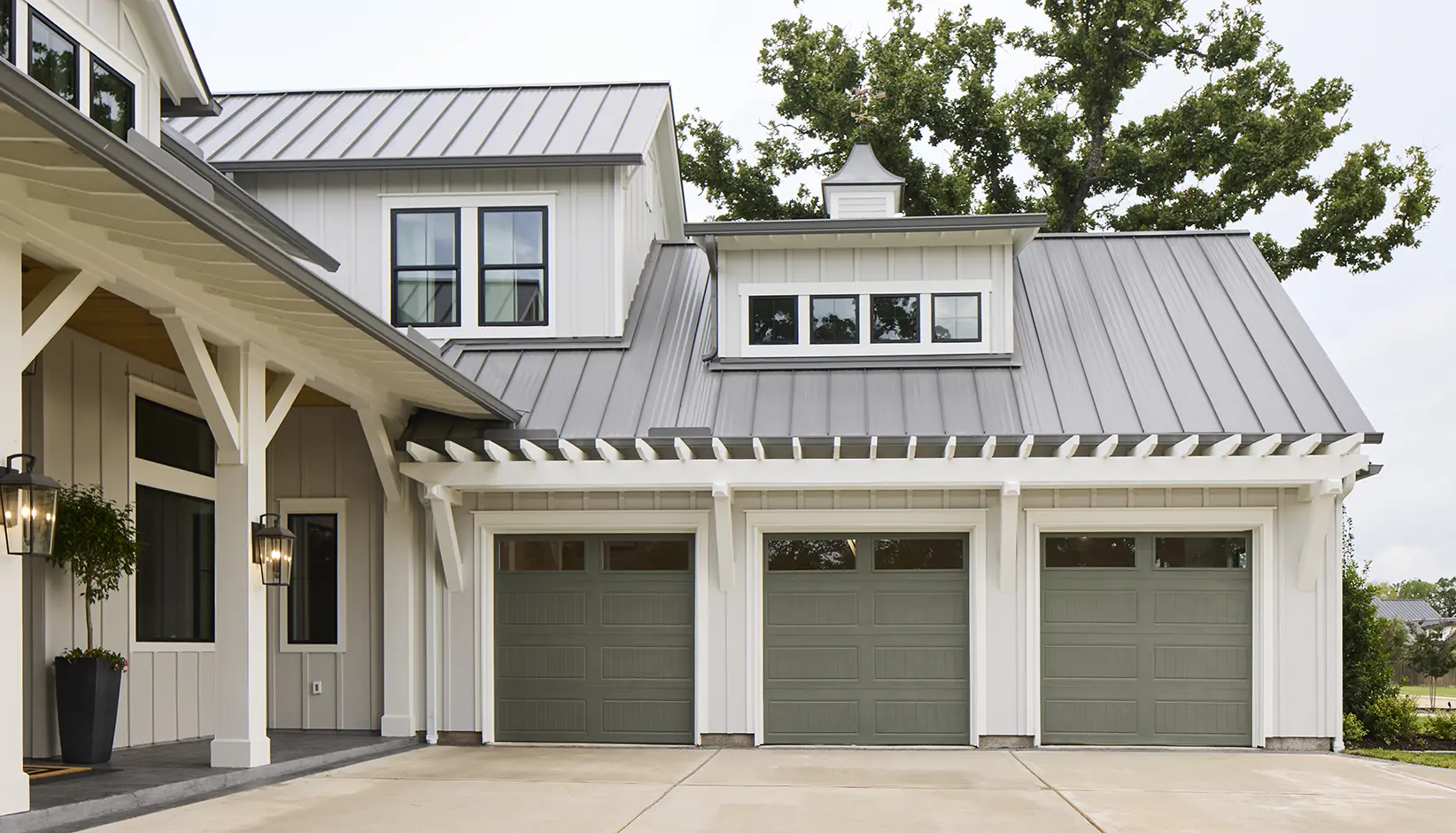
Gallery® Steel garage door with long panels and plain long windows in custom color. Photo Credit: Laurey Glenn Builder: Kurk Homes
Most garage door manufacturers insulate with rigid polystyrene panels cut to size and fitted between steel skins. That approach is effective, but the panels can't perfectly fill the interior cavity.
Clopay's Intellicore® technology takes a different approach: polyurethane foam is injected under pressure and expands to fill the interior cavity, bonding directly to both steel skins as it cures. That bond eliminates the seam gaps that limit standard polystyrene doors, adds structural rigidity the panels wouldn't otherwise have, and improves sound dampening in the same step.
The result, per Clopay's own data, is R-values reaching up to R-20.4 — roughly double what standard single-layer polystyrene doors achieve at comparable thickness.
Factors to Consider When Making Your Decision
A few important factors will help point you toward the garage door option that’s right for your home:
Climate
- In regions with extreme temperatures, garage door insulation helps protect against heat and cold, making the garage more comfortable and reducing the strain on your home’s energy system.
- In moderate climates, you may not need an energy-efficient garage door, but some homeowners still appreciate the added comfort insulation provides.
Garage Usage
- If your garage is used solely for parking, non-insulated garage doors may be sufficient.
- For garages used as workshops, gyms, or hobby spaces, insulation can really improve your comfort.
- Storing temperature-sensitive equipment or supplies? A door with a higher R-value offers extra protection from the elements.
Attachment to Home
- Insulation is especially valuable if your garage is attached to the house, since heat loss or gain through the garage can impact nearby living spaces and raise energy bills.
- An insulated garage door acts as a buffer, helping maintain stable conditions in both the garage and adjoining rooms.
Budget
- Insulated garage doors typically have a higher garage door cost up front, but may provide long-term savings through reduced heating and cooling expenses and fewer maintenance needs.
- You’ll have to consider the initial investment against possible savings over time to determine what works best with your budget.
Noise Sensitivity
- For homes in busy neighborhoods or with living spaces near or above the garage, insulation provides effective noise reduction from both outside and inside the garage.
- If minimizing noise is important to you, insulation delivers significantly better sound control compared to non-insulated garage doors.
Door Material
- The material you select affects how well your door insulates.
- Steel doors are often paired with foam insulation for high R-value performance.
- Wood offers some natural insulating ability but doesn’t match insulated steel or Intellicore® doors for insulation.
- Aluminum is lightweight but should generally be combined with insulation for improved energy efficiency.
See How the Right Garage Door Makes a Difference
Sometimes it’s easiest to make a choice when you can picture it in context. Here are a few common homeowner scenarios that highlight when insulated garage doors or non-insulated garage doors make the most sense.
Example 1: Insulated Garage Door in a Cold Climate
Imagine a homeowner living in Minnesota, where winter temperatures routinely drop well below freezing. Their garage is attached to the house and doubles as a woodworking shop. An insulated garage door with a high R-value helps keep the bitter cold at bay, making it possible to work comfortably on projects even in January. The garage door insulation adds another layer of separation between the workshop and the main house, keeping energy bills lower and ensuring tools and materials aren’t damaged by constant temperature swings.
Example 2: Non-Insulated Garage Door in a Mild Climate
Now consider a homeowner in coastal California, where temperatures rarely get extreme. Their garage is detached and used strictly for parking. For them, non-insulated garage doors are a practical and affordable choice. The moderate weather means heat transfer and garage door insulation aren’t major concerns, and the lower garage door cost leaves money for other home improvements.
Example 3: Home Office or Bonus Room Above the Garage
A family has converted the space above their attached garage into a home office. They notice that during both winter and summer, the room tends to get uncomfortably cold or hot. By installing an insulated garage door with a high R-value, they create a barrier that helps stabilize temperatures in the garage below, which in turn keeps the upstairs living space much more comfortable year-round. The insulation also reduces noise from garage activity, making it easier to focus during work calls.
Cost Breakdown and ROI
When comparing insulated garage doors and non-insulated garage doors, it’s important to evaluate both the initial price and long-term value.
Material and Installation Costs
Non-insulated garage doors are usually less expensive. A standard 8x7 garage door can cost $750 to $1,500, with installation, hardware, and custom features costing extra. Insulated garage doors often start at $900 and can exceed $2,500, especially for premium materials or higher R-value insulation like Clopay’s Intellicore®. While the initial garage door cost is higher, these upgrades add comfort, durability, and energy efficiency.
Energy Savings and ROI
The real difference often shows up over time. Insulated garage doors can help lower energy bills, particularly in extreme climates or for attached garages. Homeowners may see savings that offset the initial investment. Added benefits of an insulated garage door include fewer repairs, less garage door maintenance, and potentially higher resale value.
Frequently Asked Questions
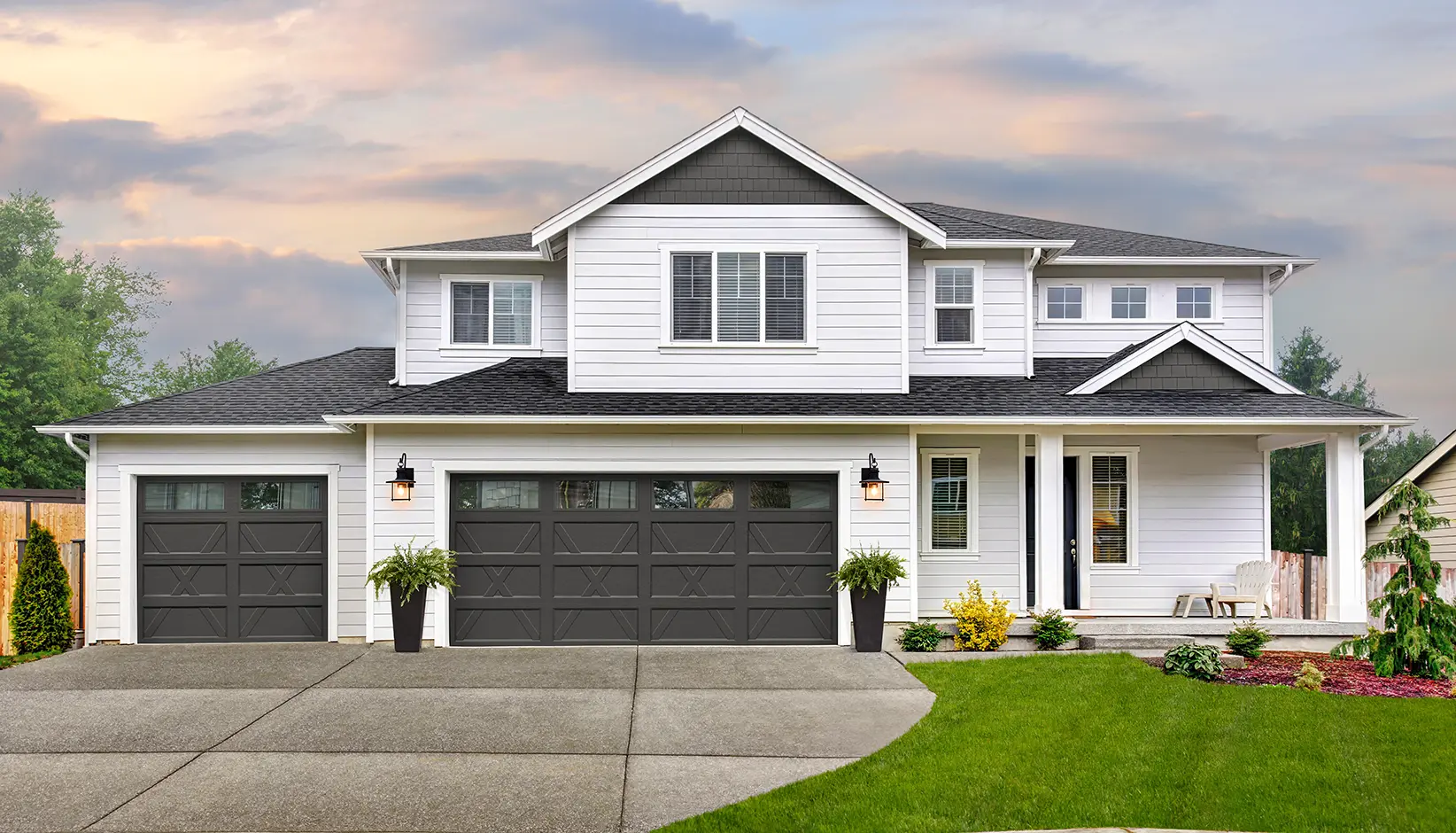
Bridgeport™ Inlay garage door in Design X with plain long windows in Iron Ore
What R-value garage door do I need?
It depends on your climate and how you use the garage. Homeowners in regions with hot summers or cold winters, or with an attached garage, generally benefit most from a higher R-value (R-12 and up). For an unheated, detached garage used only for parking in a mild climate, a lower R-value or non-insulated door is often enough.
Is Intellicore® worth the extra cost?
For attached garages, workshops, or any space used year-round, the added R-value, noise reduction, and dent resistance typically offset the higher upfront cost over time through energy savings and fewer repairs. For a detached garage used strictly for parking in a mild climate, the upgrade matters less.
Do insulated garage doors really reduce noise?
Yes. In Clopay's own testing, a standard polystyrene-insulated door measured 96 decibels versus 80 decibels for an Intellicore®-insulated door.
Can I add insulation to an existing non-insulated door?
Retrofit insulation kits exist, but they typically use adhesive-backed foam panels rather than the injected, bonded foam used in a factory-built insulated door, so performance and durability are usually lower than a purpose-built insulated door.
Choosing between insulated garage doors and non-insulated garage doors comes down to cost, climate, garage use, noise, and materials. Consider your priorities: is the garage simply for parking, or do you need comfort and protection for storage, hobbies, or living space?
Every home is different, so talking with a garage door professional can help you make the best choice. To get started, browse Clopay’s garage door product offerings for a solution that fits your needs.
Want to learn more about insulated garage doors?