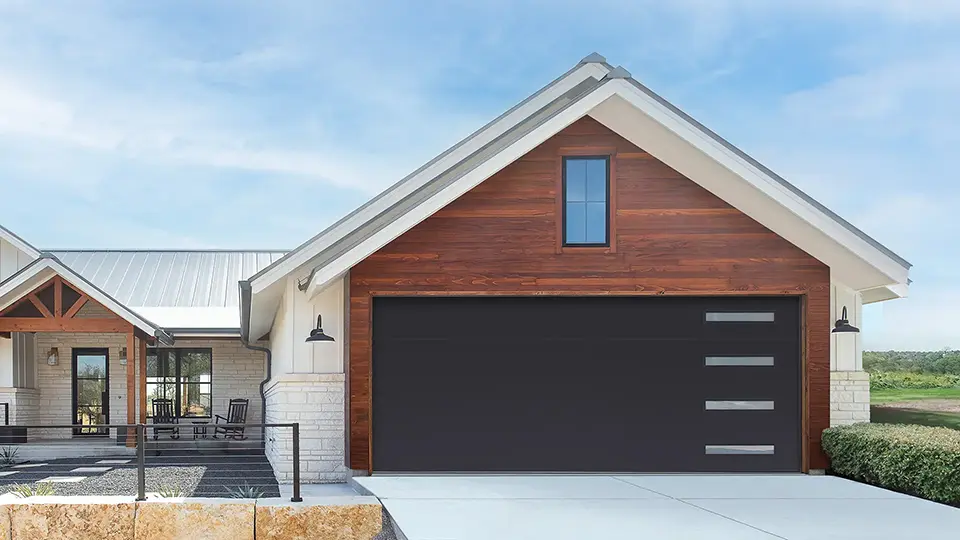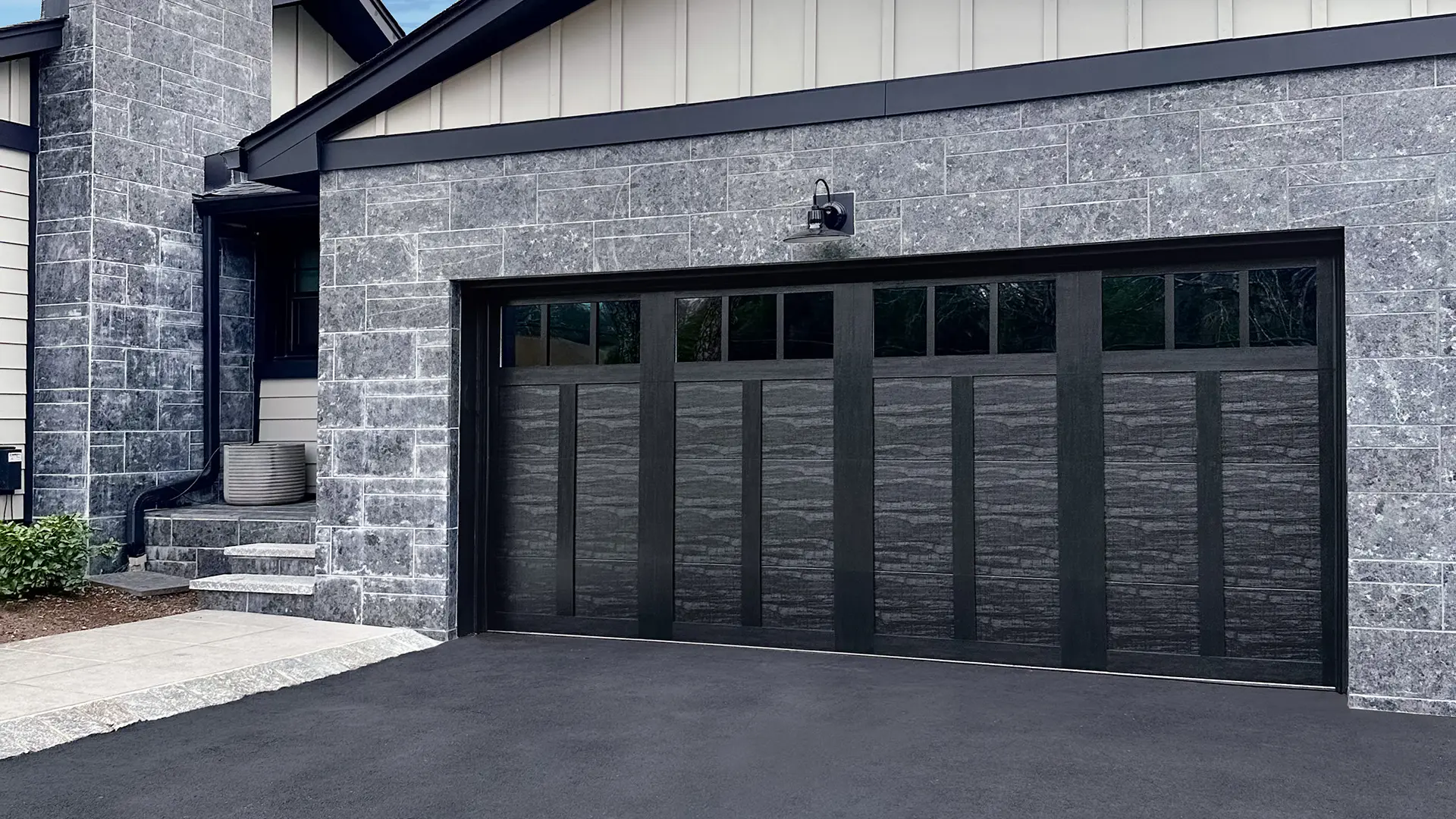
When the summer sun hits its peak, even the best air conditioners can end up working overtime, and so can your utility bill. What many homeowners don’t realize is just how much heat sneaks into the house through the garage. In many hot climate zones, garages become the hidden culprit behind those eye-popping summer bills.
If you live in an area with relentless summer temperatures, the difference between a typical garage door and an energy-efficient garage door is night and day. Upgrading to an insulated garage door delivers practical garage door energy savings summer after summer. This article takes you through the how and why, as well as what to look for as you shop for the best garage doors for hot weather.
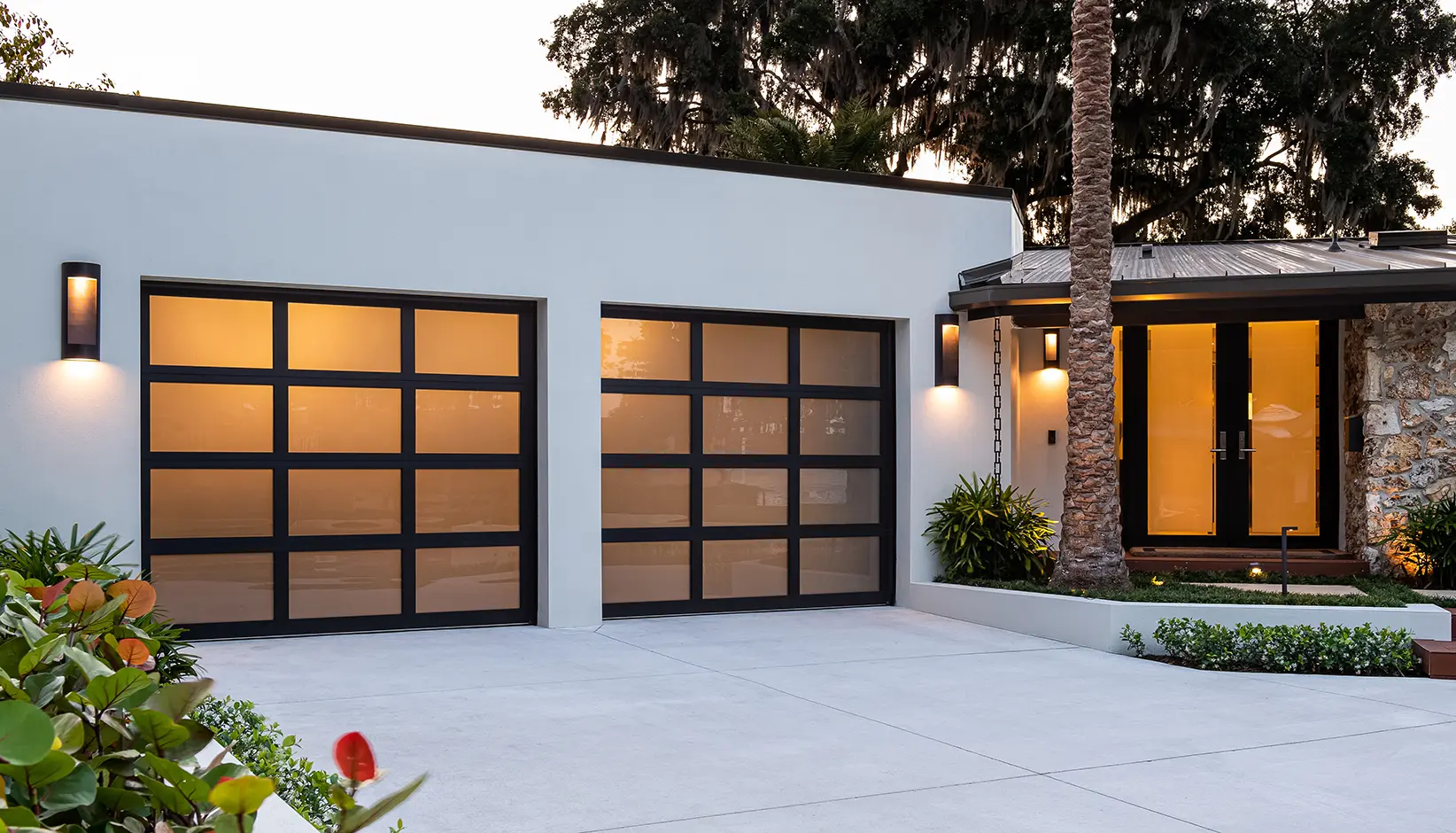
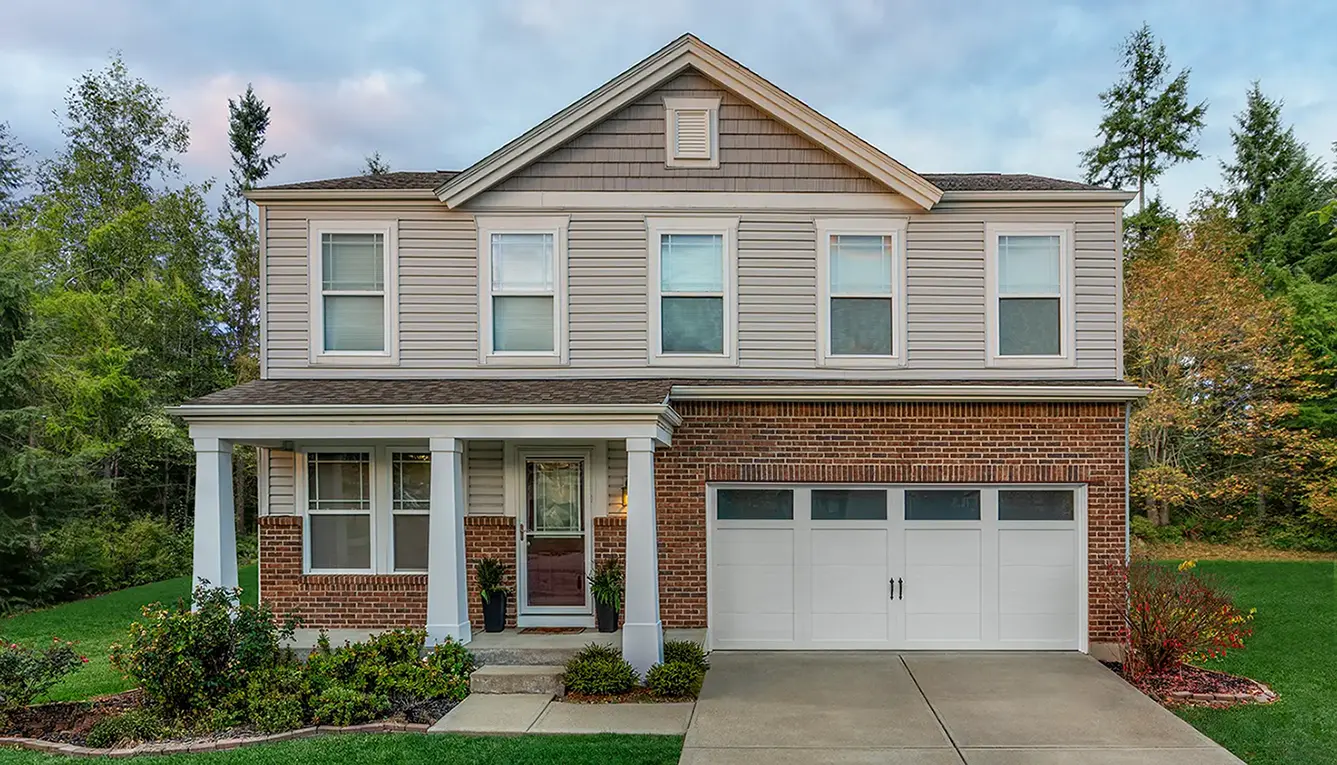
Avante® garage door
The Hot Climate Challenge: Why Standard Garage Doors Fall Short
When you’re battling triple-digit temperatures, every part of your house must do its part to keep heat out, and the garage is no exception. Standard, uninsulated garage doors often do more harm than good. Without any insulating barrier, these doors soak up radiant heat from the sun—especially if they get direct afternoon exposure.
Metal and basic panel doors act as conductors, transferring exterior heat straight inside, and temperatures in the garage can climb 20°F or more above outside temps. If the garage is attached to your home, that superheated air seeps through shared walls, making your HVAC system run harder and costing you money.
But heat buildup also causes practical issues beyond your wallet. Tools, paint, electronics, and even vehicles can deteriorate more quickly or malfunction in these oven-like conditions. Stepping into a sweltering garage is uncomfortable and can present safety risks, from overheated vehicle batteries to hazardous chemical off-gassing. Garage door cooling is a necessity for protecting both your belongings and your health.
Understanding Hot Climate Zones
Energy-efficient garage doors are especially important in the hottest parts of the country, specifically IECC climate zones 1 to 3. These regions include vast swaths of Arizona, Texas, Florida, southern California, Louisiana, Nevada, and areas throughout the South, where soaring temperatures, extended heat waves, and strong sunlight are the norm for much of the year.
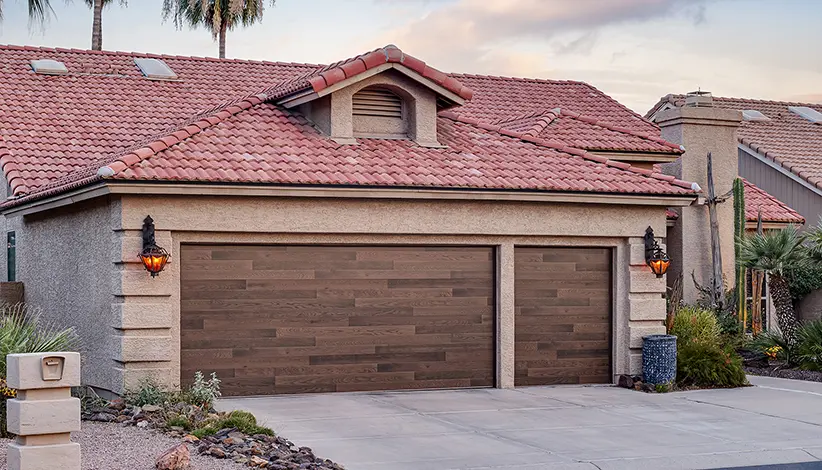
Modern Steel™ Ultra-Grain® Plank garage door
But there are big differences between these hot zones. In the Southwest, air is often dry and relentless, with daytime highs easily breaking the 100°F mark and concrete or pavement radiating additional heat up into the garage door. In contrast, southeastern states grapple with high humidity, which, in addition to raising the “feels-like” temperature, can reduce insulation effectiveness and speed up deterioration of stored items, hardware, or finishes.
Typical summer temperatures across these regions range from the mid-80s to well over 110°F. During peak periods, garages may hit 120°F or worse. Solar radiation intensity, determined by both the sun’s angle and cloud cover, is another factor that can influence how much heat gets transferred via the garage door. Matching your available options to your unique regional climate increases is the best way to select the best garage doors for hot weather.
Energy-Efficient Features for Hot Climates
If you want to cut your cooling bills in hot climates, insulation is the foundation of an effective energy-efficient garage door. The R-value rating measures how well a door resists heat flow—the higher, the better. For Zone 1-3 climates, homeowners should consider at least R-12 and preferably R-15 or above. Polyurethane insulation generally outshines polystyrene, packing more resistance into a thinner profile and providing better protection against the most extreme temps.
Color and reflectivity are the next line of defense. Light-colored or white doors naturally reflect more solar energy, keeping surface temperatures lower than darker options. High Solar Reflectance Index (SRI) ratings are important; a higher SRI means less heat absorbed and transmitted indoors. Many reflective garage doors also feature coatings or finishes that help bounce even more sunlight and resist fading under strong UV.
Thermal breaks—built-in design features that prevent heat from passing straight through the frame—and multi-layer, steel-skinned construction with thick insulation are ideal in the best garage doors for hot weather. Air gap insulation can add another buffer, further shrinking conductive heat flow. These features, stacked together, provide reliable garage door energy savings summer after summer, even in punishing climates.
Material Selection for Hot Climate Performance
Material choice determines both the efficiency and the longevity of garage doors for hot climates.
Steel doors with insulation are a top choice for most homeowners:
- Offer excellent strength and security.
- Insulated with quality foam cores to block heat.
- Important to choose a high R-value; without it, steel doors (especially dark colored) can act like radiators.
- Best results come from pairing steel with a light, reflective finish and a polyurethane core.
Aluminum doors are lightweight and naturally resistant to rust:
- Popular in humid climates, but their high thermal conductivity means they transfer heat easily.
- Effective only when built as double- or triple-layer insulated units with a reflective finish.
- Best used where rust is a bigger concern than temperature—such as in coastal areas—so long as the door still has quality insulation.
Composite and wood doors bring strong natural insulating properties:
- Composite options have been engineered for superior thermal resistance and minimal maintenance, combining the appearance of wood with the durability needed for harsh environments.
- Wood doors don’t conduct heat as much as metal but require regular upkeep to avoid drying, cracking, or fading.
- Specialty composites can provide both high insulation and resistance to warping and rot, making them increasingly appealing for challenging hot climate conditions.
Color and Finish Considerations
Canyon Ridge® Elements garage door
The science is simple: the darker the color, the more heat is absorbed. Light-colored doors, including whites, pale beige, and soft grays, can reflect up to 90% of incoming sunlight, while dark doors might absorb over 70%, becoming a major source of heat gain.
High Solar Reflectance Index (SRI) finishes are best, as they indicate a door will reflect more of the sun’s energy and remain cooler under the harshest rays. Powder-coated finishes are durable and outperform traditional paint in resisting UV rays and color fade.
Window Considerations in Hot Climates
Windows in energy-efficient garage doors add style and daylight, but they can be a double-edged sword in the heat. Without heat-blocking glass, windows quickly become hotspots. The best option: Low-E (low-emissivity) coatings, which reflect far more infrared energy and can prevent up to 70% of solar heat from entering. Tinted glass also blocks heat gain, while Insulated Glass Units (IGUs) with two panes separated by air or gas, increase thermal protection and make windows practical for garage doors for hot climates.
You want to be strategic in the window placement. Keep glass away from direct west or south exposures and consider operable windows or vents to encourage cross-ventilation. Balance aesthetics with performance: smaller and frosted windows offer more privacy and less solar gain while still letting in natural light. Or consider aftermarket window films to cut UV and heat without sacrificing brightness.
Ventilation and Air Circulation
No matter how good the door, even the most energy-efficient garage doors need some ventilation in extreme heat. Passive solutions like ventilation panels, screened openings, and well-placed air vents improve airflow and lower temperatures naturally. Proper vent placement—high and low, and ideally on different walls—enhances cross-ventilation and prevents stale, overheated air from accumulating.
Exhaust fans rated for hot climates can also evacuate hot air quickly, and solar-powered models add efficiency without additional energy costs. The best systems can be automated by connecting to a smart thermostat or timer, so ventilation happens exactly when you need it.
Passive cooling goes a long way, too. Stack effect ventilation, which relies on the principle that hot air rises and escapes through higher vents, keeps garages cooler throughout the day. Wind-driven vents work well in breezy areas, and night cooling (opening doors and vents after sunset) lets lingering heat escape.
Smart Technology for Hot Climate Efficiency
Modern energy-efficient garage doors often pair insulation and materials with smart technology for even greater gains. Temperature monitoring systems placed inside your garage, including smart sensors and real-time alerts, allow homeowners to track heat and humidity remotely. Some systems offer remote monitoring, so you can check garage conditions from your phone.
Automated ventilation controls bring garage comfort to a new level. Fans, vents, and even window shades can be triggered by rising temperatures or humidity, so the garage space cools automatically during the hottest parts of the day. Scheduling features let you optimize ventilation around your daily patterns or the weather forecast.
Energy usage tracking, through dedicated apps or your broader home platform, helps monitor which strategies are driving energy savings, how often fans run, and what those improvements are actually costing (or saving) you. With just a little setup, smart controls can push your garage door energy savings summer after summer, while keeping your space safe and comfortable.
Installation Considerations for Hot Climates
Even the best energy-efficient garage doors greatly depend on proper installation. Step one is using comprehensive weatherstripping around the frame, bottom seals to keep heat and dust out, and attention to side and top seals for a complete barrier. A high-quality install creates the airtight frame needed for reduced energy usage.
Proper insulation installation is equally important. Any gaps or poorly fitted panels can lead to thermal bridging, where heat finds its way through. Make sure the insulation runs seamlessly across the entire door by aligning panels and fastening them securely. Professional installers are trained to check for any visible gaps or areas where the insulation is compressed, helping guarantee there are no weak spots in your garage door’s thermal barrier.
While some homeowners try DIY installation, the complexity of handling insulation, weather barriers, and hot climate materials tips the scales toward hiring a pro. Professional installation often means access to better warranties and local expertise, which is especially relevant as many Clopay-authorized installers know what works best for garage doors for hot climates.
Maintenance in Extreme Heat
Maintenance is key to long-lasting, effective garage doors for hot climates. Heat causes expansion and contraction, which stresses both seals and hardware. UV rays fade finishes, crack weatherstripping, and may degrade some types of insulation. Lubricate all moving parts—hinges, rollers, and tracks—with heat-resistant products.
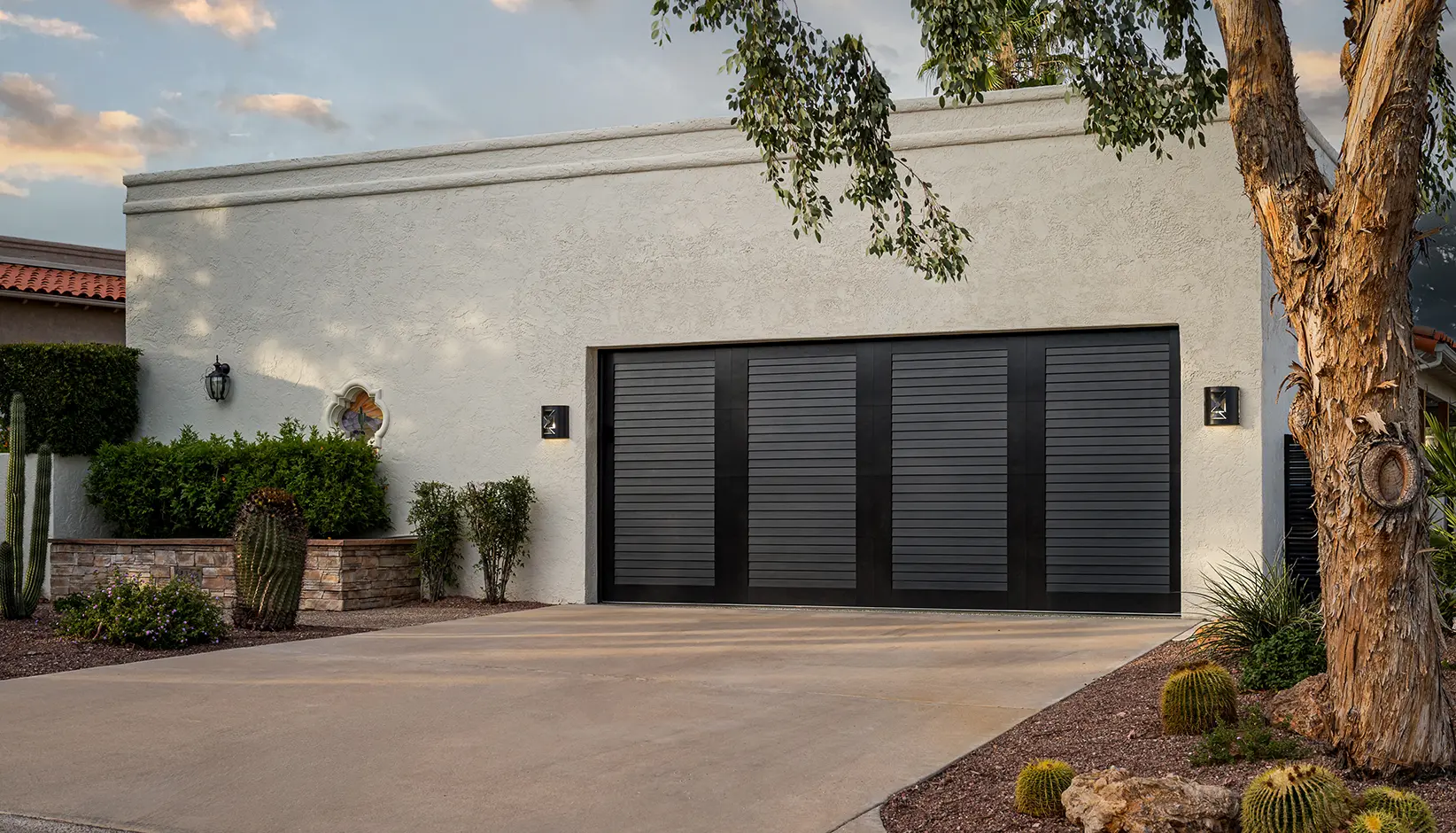
Canyon Ridge Louver
Inspect seals and finishes before summer, watch for mid-summer wear or expansion issues, and reassess seals and lubrication after the hottest months. Typical issues include seal degradation, hardware expansion, faded or chipped coatings, and minor misalignment. Be sure to fix them fast to keep that garage door cooling advantage.
Cost-Benefit Analysis
Upfront, energy-efficient garage doors do cost more thanks to denser insulation, advanced finishes, or smart features. Professional installation does add some additional cost but ensures peak performance and warranty protection.
The payoff? Upgrading to insulated garage doors can cut energy bills by 20% in many hot regions which reduces the strain on your HVAC system. And during peak demand, those savings multiply. Over time, monthly energy reductions add up, with many homeowners seeing payback within five to eight years, especially if rebates or rising utility rates are considered. An upgraded door can also lift home resale value, as energy-efficient features are increasingly attractive to buyers.
Don’t forget to check for local utility rebates or energy efficiency incentives. These can shorten the payback period and make smart upgrades even more affordable.
Regional Considerations
No two hot regions are the same. In Southwest desert areas like Arizona and Nevada, homeowners face intense sun, soaring temperatures, and frequent dust storms. Doors here should have top-tier insulation, high Solar Reflectance Index (SRI) finishes, and robust weatherstripping to block out heat, sand, and fine dust. Powder-coated steel doors with a polyurethane core and minimal seams are a smart pick, helping defend against both sun and airborne grit.
In the Southeast, states like Florida, Texas, and Louisiana add thick humidity to the heat. Garage doors for hot climates in these areas need moisture-resistant materials, as well as strong seals to prevent humid air from entering and causing mold or corrosion. Insulation must hold up in damp environments, and hardware should be rust-resistant. Regular checks for seal integrity and condensation help protect belongings and keep garage interiors fresher.
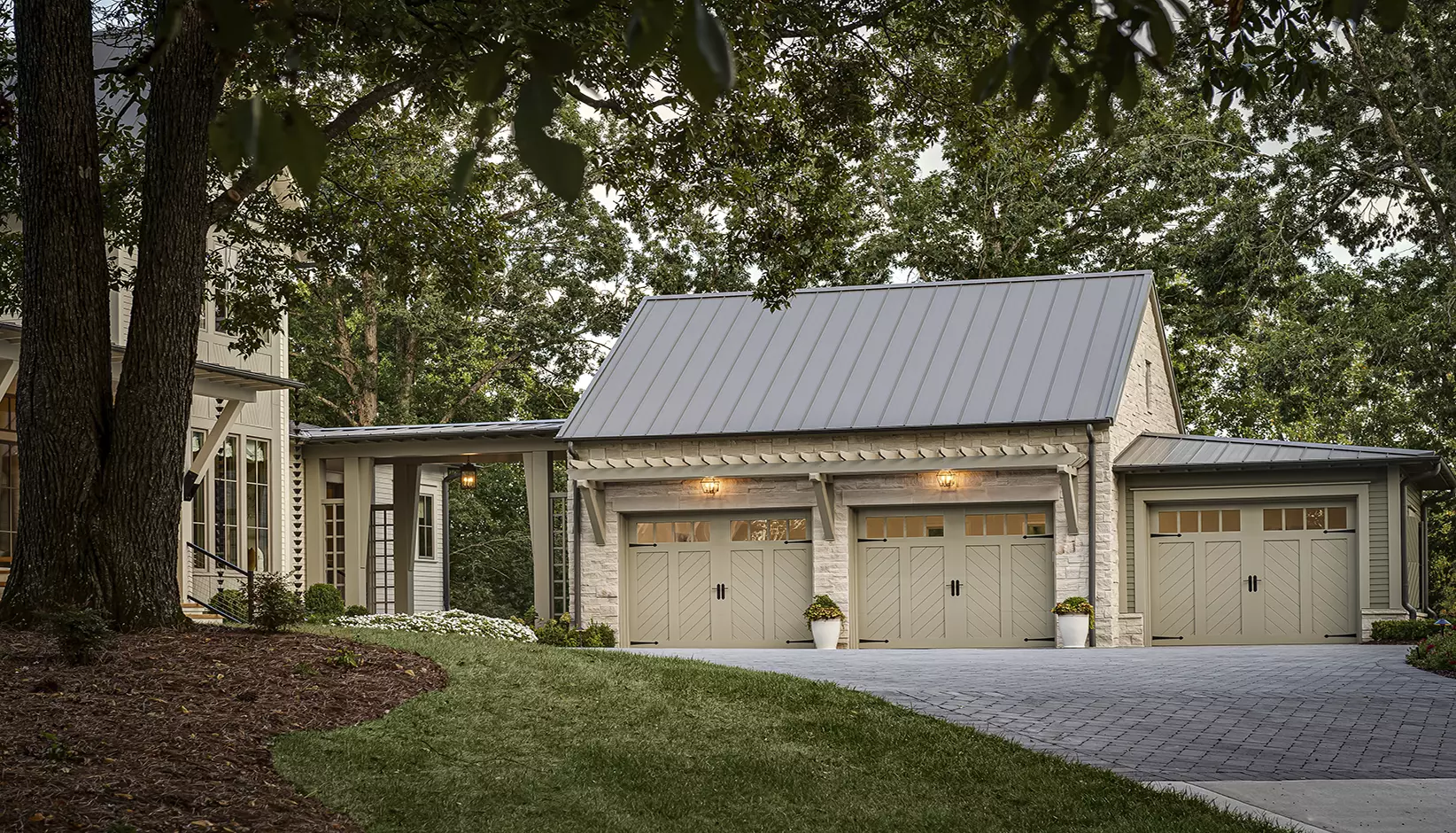
Canyon Ridge Chevron garage door
California’s coastal heat is milder but just as persistent, with the added twist of salt-laden air that can corrode metals and wear down finishes. Homeowners here should look for doors with advanced coatings, such as marine-grade finishes, and favor composite or fiberglass options in salty climates. With California’s strict energy codes, energy-efficient garage doors are often required, helping to support better comfort year-round while meeting local standards.
Choosing the Right Energy-Efficient Garage Door
Start by identifying your IECC climate zone, analyzing your energy bills, and honestly assessing how you use your garage. Make a list of must-have features (high-value insulation, reliable seals, and garage door cooling options). Weigh these essentials against luxury upgrades, such as smart automation or custom glass, to find the right balance of performance, style, and budget.
Upgrading to energy-efficient garage doors for hot climates improves comfort, reduces cooling costs, and protects your home. Begin by assessing your needs and exploring feature options but always consult a professional for best results. Look for a Clopay® dealer near you for a reputable expert who has experience working with garage doors for hot climates.