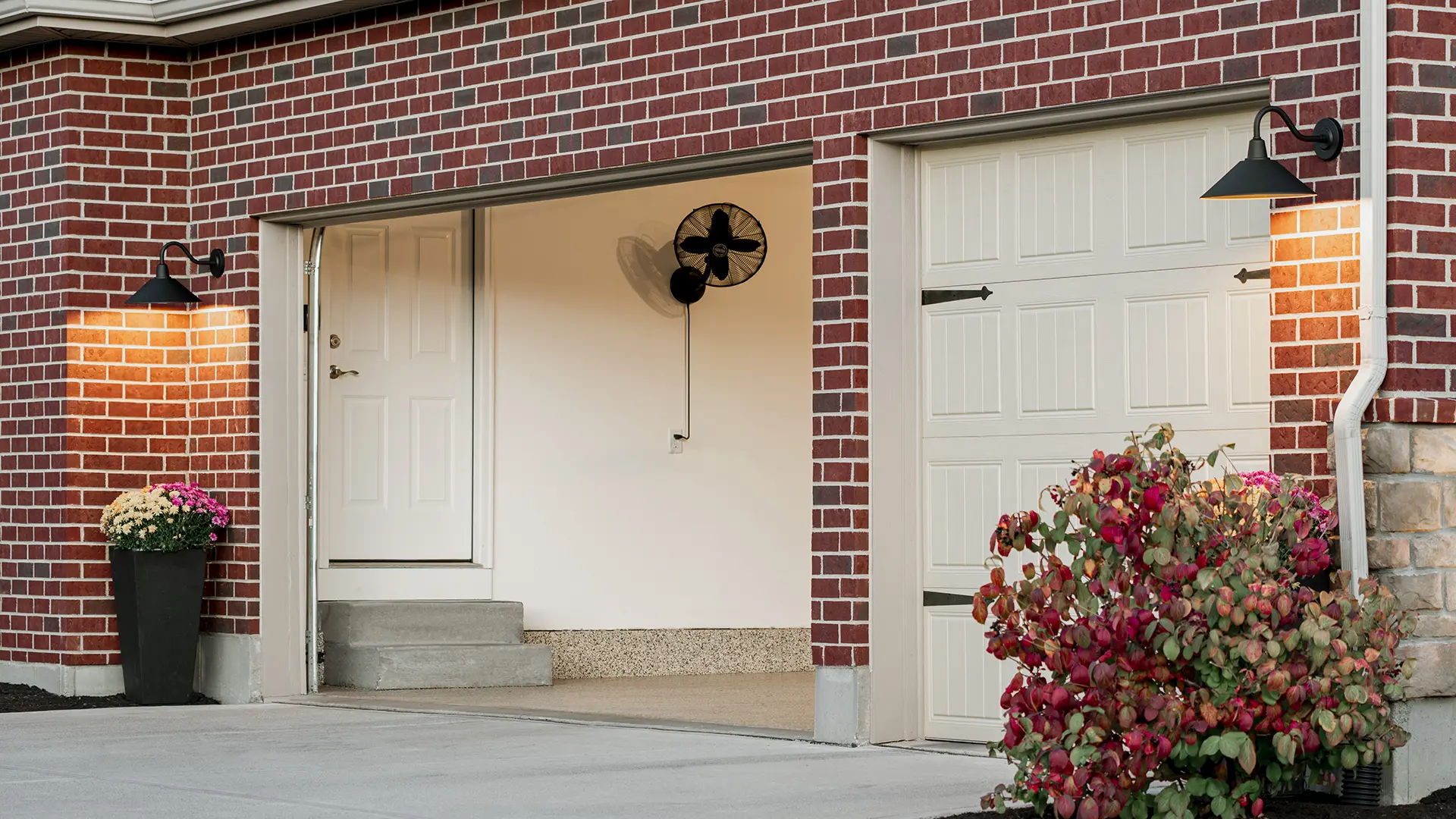
If your garage turns into a sauna every summer, you’re not alone. Most garages double as workshops, gyms, storage hubs, or even hangout spots, but poor garage ventilation and rising temperatures can make it feel like an oven. The good news: you don't have to settle for a miserable garage. Installing a garage ceiling fan is one of the most effective, affordable, and energy-efficient ways to transform that hot, stuffy space into somewhere you'll want to spend time. In this guide, we'll walk you through everything you need to know, from why garage ventilation matters, to choosing the right fan, to creative ways to set up your ideal garage cooling system.
Why Garage Ventilation Really Matters
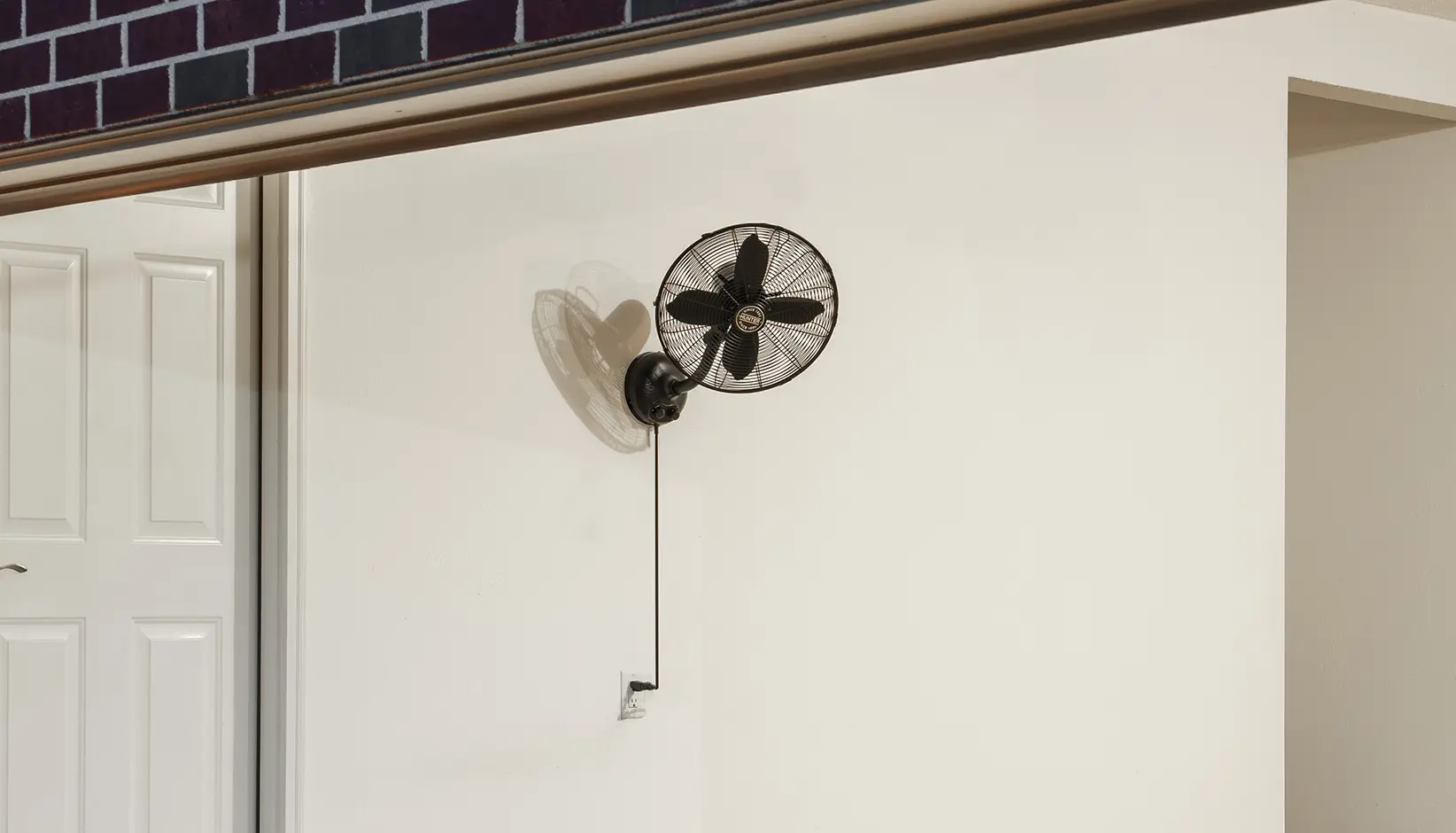
Garages are typically enclosed spaces with limited airflow, and that creates several problems beyond just heat. Thankfully, a garage ceiling fan addresses all of them.
Heat buildup is the most obvious issue. Without adequate airflow, heat radiates from the roof, walls, concrete floors, and even parked vehicles, quickly making the space unbearable. On a 90°F day, a poorly ventilated garage can reach temperatures well over 120°F.
Moisture and humidity are equally problematic. Garages are prone to condensation, especially during temperature swings between day and night. Trapped moisture encourages mold and mildew growth, damages stored items, corrodes tools, and can even affect the structural integrity of drywall and wood framing over time.
Fumes and odors from cars, power tools, paint, solvents, and chemicals need somewhere to go. Without ventilation, these can concentrate to unhealthy (and even dangerous) levels. Good garage ventilation keeps fresh air flowing and carries those fumes out.
Air quality matters significantly if you use your garage as a workshop or fitness space. Stale, hot air makes it harder to concentrate, reduces your energy levels, and can pose health risks from particulates and chemical exposure.
The Best Garage Cooling Solutions
When you’re shopping for fans for a garage, you’ve got a few options:
- Garage ceiling fans: These are generally the top choice for most homeowners and your best bet for full-room air circulation. Mounted overhead, they circulate air across the entire garage and create a steady breeze. Many models are built specifically for the demands of garage environments with durable motors, high-velocity airflow, and ratings that allow use in damp or humid conditions.
- Portable or pedestal fans: Good for spot cooling, these fans are flexible and require no installation. However, they do take up floor space and don’t move as much air.
- Wall-mounted fans: A solid middle-ground option if you need to keep your floor clear and can’t mount to the ceiling.
- Exhaust fans: Actively pull hot air out and bring fresh air in and are especially effective when paired with a ceiling fan.
- Mini-split ACs: Powerful but expensive; very few garages need this level of cooling.
For most people, a dedicated garage ceiling fan or one paired with an exhaust fan strikes the perfect balance between comfort, cost, and energy use.
Sizing and Placing Your Garage Fans Ceiling
Not every ceiling fan is suited for the garage environment, and choosing the wrong size or placement can mean disappointing airflow. Here's how to get it right.
Matching Fan Size to Garage Size
Fan blade span is the primary driver of coverage area. As a general rule:
- Small garages (up to 1 car, ~200 sq ft): A fan in the 36"–44" range provides adequate coverage.
- Standard 2-car garages (~400–500 sq ft): Look for fans in the 52"–60" range for full coverage, or consider two smaller fans.
- Large 3-car or oversized garages (600+ sq ft): Multiple fans, or a single large-diameter fan (60"+), will ensure consistent airflow throughout.
For maximum effectiveness, the fan should be centered over the primary work zone rather than just the geometric center of the room. If you spend most of your time at a workbench along one wall, position the fan to move air over that area.
Ceiling Height Considerations
Ceiling height directly affects both fan placement and the type of mounting hardware you'll need.
- Standard ceilings (8'–9'): A flush-mount or low-profile fan keeps blades safely above head level while maximizing airflow at work height.
- Higher ceilings (10'–12'): A standard downrod mount brings the fan to an ideal operating height, roughly 7–9 feet above the floor.
- Very high ceilings (14'+): Extended downrods or fans designed for high-ceiling installation ensure the fan can still push air down effectively where people are working.
Be sure to check the fan's CFM (cubic feet per minute) rating — the higher the number, the more air the fan moves. For a garage, prioritize high-CFM models. Many fans marketed specifically for garages, workshops, and industrial spaces are engineered to deliver significantly higher airflow than standard residential ceiling fans of the same blade size.
Transforming Your Space: Creative Ways to Use Garage Ceiling Fans
One of the best things about garage ceiling fans is their versatility. Here are a few ways to put them to work across different types of garage setups.
Home workshop: Mount the fan above your workbench to keep fumes, dust, and heat moving away from your breathing space. Run the fan in reverse during colder months to bring warm air down from the ceiling and you'll be able to comfortably extend your working season.
Garage gym: Place a high-velocity fan directly over your exercise area to stay cool during workouts.
Mixed-use/storage spaces: Many garages serve double duty as storage areas and casual hangout spaces — man caves, she sheds, or overflow entertaining areas. For these spaces, a fan with an integrated LED light serves double duty, providing both airflow and quality overhead lighting without the need for a separate fixture.
Car enthusiast’s garage: If you spend serious time working on vehicles, a ceiling fan helps manage the heat and fumes that come with the territory. If your vehicles are frequently running or you're using paint or solvent-based products, also consider installing a wall or exhaust fan to actively push fumes out rather than simply circulating them.
Spotlight: DualMount Garage Fan with LED Light from Hunter
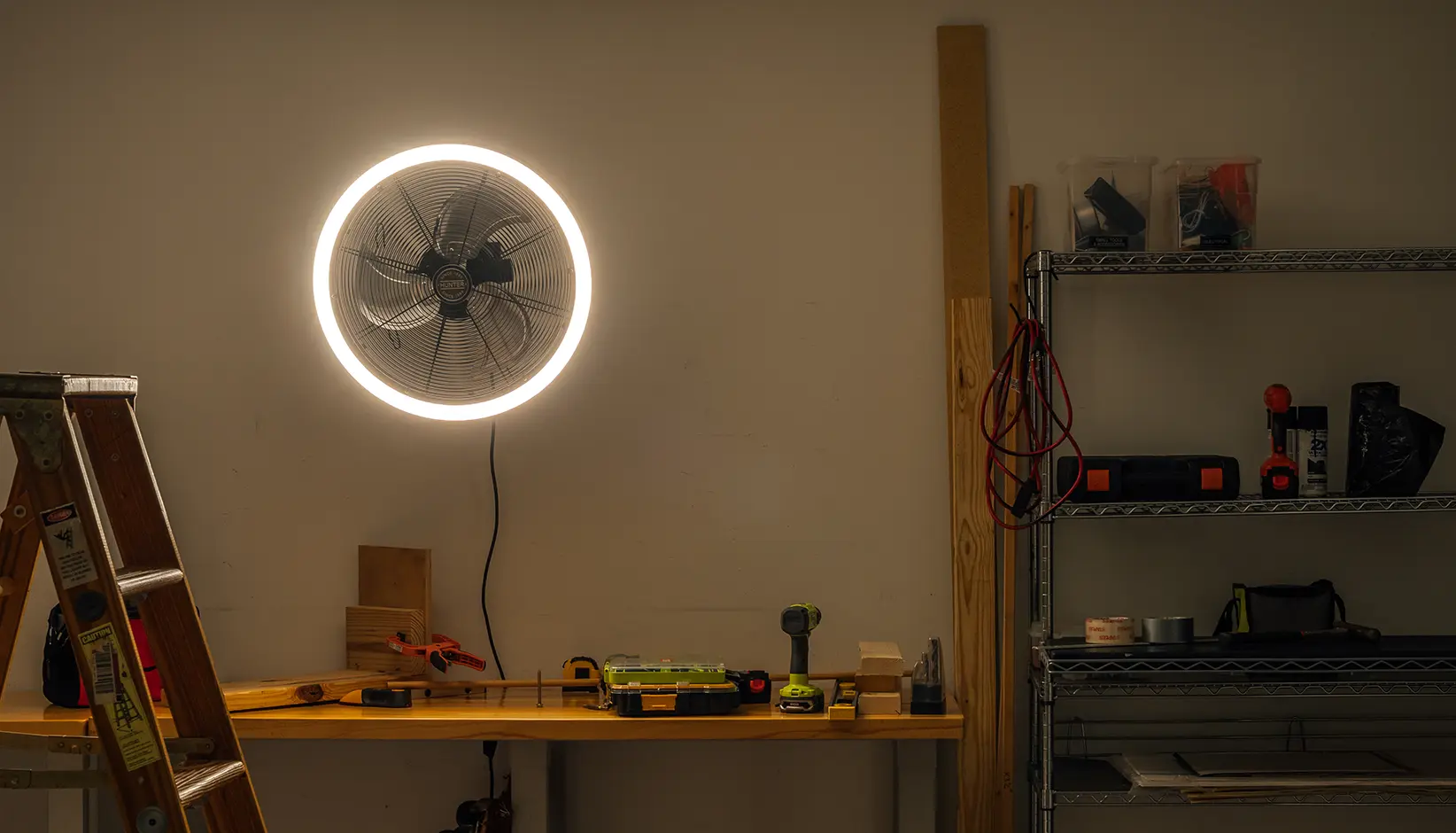
If you want a garage ceiling fan that’s powerful, flexible, and easy to install, check out the Hunter DualMount Garage Fan Heavy Duty with LED Light. Designed specifically for garages and workshops, it’s plug-and-play so you don’t have to deal with complicated wiring. This fan features:
- Flexible mounting: Install it on any joist or stud, no hardwiring required.
- Adjustable airflow: Aim it exactly where you need cooling.
- SureSpeed® high-velocity air: Moves serious air, up to 8 MPH.
- WhisperWind® motor: Six speeds, reversible for year-round use.
- Integrated LED light ring: No need for an extra ceiling fixture.
- Remote control: Adjust settings at your convenience.
- Damp-rated: Safe for garages, workshop spaces, and even covered patios.
How to Install a Garage Ceiling Fan: Step-by-Step
Installing a ceiling fan in your garage is a manageable DIY project for most homeowners, though the exact process varies depending on whether you're doing a hardwired install or using a plug-in system.
For Hardwired Ceiling Fans:
Step 1 – Turn Off Power
Shut off the circuit breaker for your garage and double-check that the power’s off at the wiring box before starting.
Step 2 – Check the Electrical Box
Make sure your ceiling box is rated to hold a fan (not just a light fixture). If not, swap it for a fan-rated box.
Step 3 – Mount the Bracket
Attach the fan’s mounting bracket to the electrical box, following the manufacturer’s instructions.
Step 4 – Wire the Fan
Connect the wires as shown in your fan’s manual. Typically, you'll connect black (hot) to black, white (neutral) to white, and green or bare copper (ground) to ground.
Step 5 – Install Fan Motor and Blades
Secure the fan motor to the bracket, then attach the blades and light kit if your model includes one.
Step 6 – Restore Power and Test
Turn the breaker back on and check that the fan and any lights work as expected.
Tip: If you’re not comfortable working with electrical wiring or if your garage doesn’t have a ceiling box, consider calling a licensed electrician.
For Plug-In or Easy-Mount Systems
If you're using a fan with a plug-in design like Hunter's DualMount Garage Fan, the process is significantly simpler. Mount the bracket to a joist or stud using the included hardware, plug into a standard outlet, and you're ready to go.
Boosting Your Garage Cooling Even More
A ceiling fan is a great start, but you’ll get even better results if you combine a ceiling fan with one or more of these strategies:
Add an Exhaust Fan: While your garage ceiling fan keeps air moving, an exhaust fan (mounted high on an exterior wall) pulls hot air out and brings fresh air in. Pairing the two creates a strong cross-breeze and helps clear out fumes or humidity fast.
Install Passive Vents: Place intake vents near the floor and exhaust vents near the ceiling. This lets cooler air flow in while hot air naturally rises and escapes.
Insulate Your Garage: Most heat sneaks in through the garage door and uninsulated walls. Adding insulation helps your fan work more efficiently and keeps the whole space cooler to begin with.
Seal Gaps and Cracks: Weather-strip around doors and windows and seal any cracks to stop hot air from leaking in or cool air from escaping.
Use a Spot Cooler When Needed: For extra-hot days or heavy projects, a portable air cooler or spot AC can drop the temperature quickly right where you need it.
Make the Most of Your Garage
Don’t let summer heat or stale air keep you from using your garage. The right garage ceiling fan that’s sized for your space and set up for real airflow can make your garage comfortable, no matter how you use it. Whether you're outfitting a home workshop, setting up a garage gym, building out a hobby space, or simply making it easier to access your storage, proper garage cooling is an investment that pays dividends every time you step through that door on a hot day.
And if you want something that’s built for the job and easy to install, remember that the Hunter DualMount Garage Fan is powerful, quiet, flexible, and designed for garage environments.