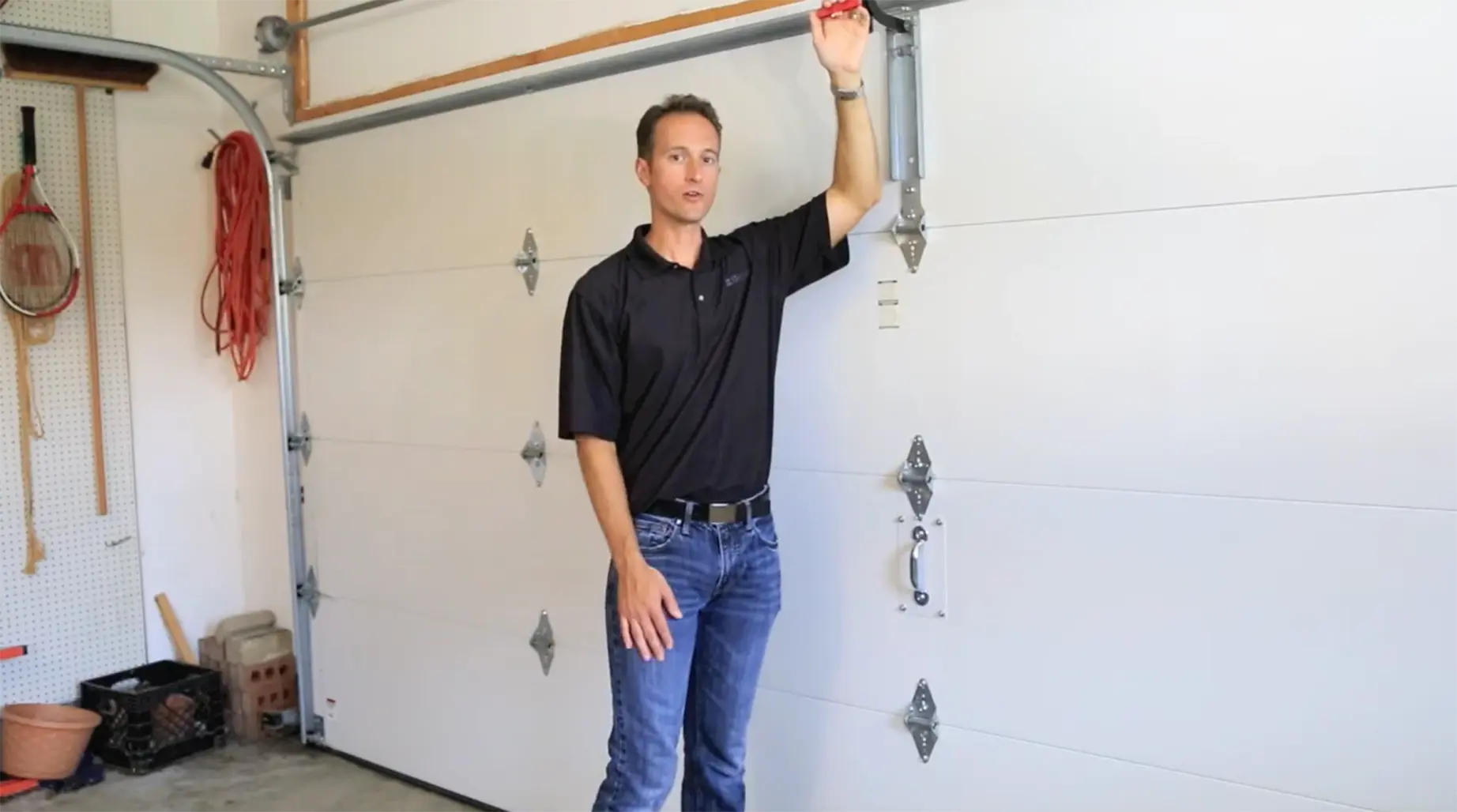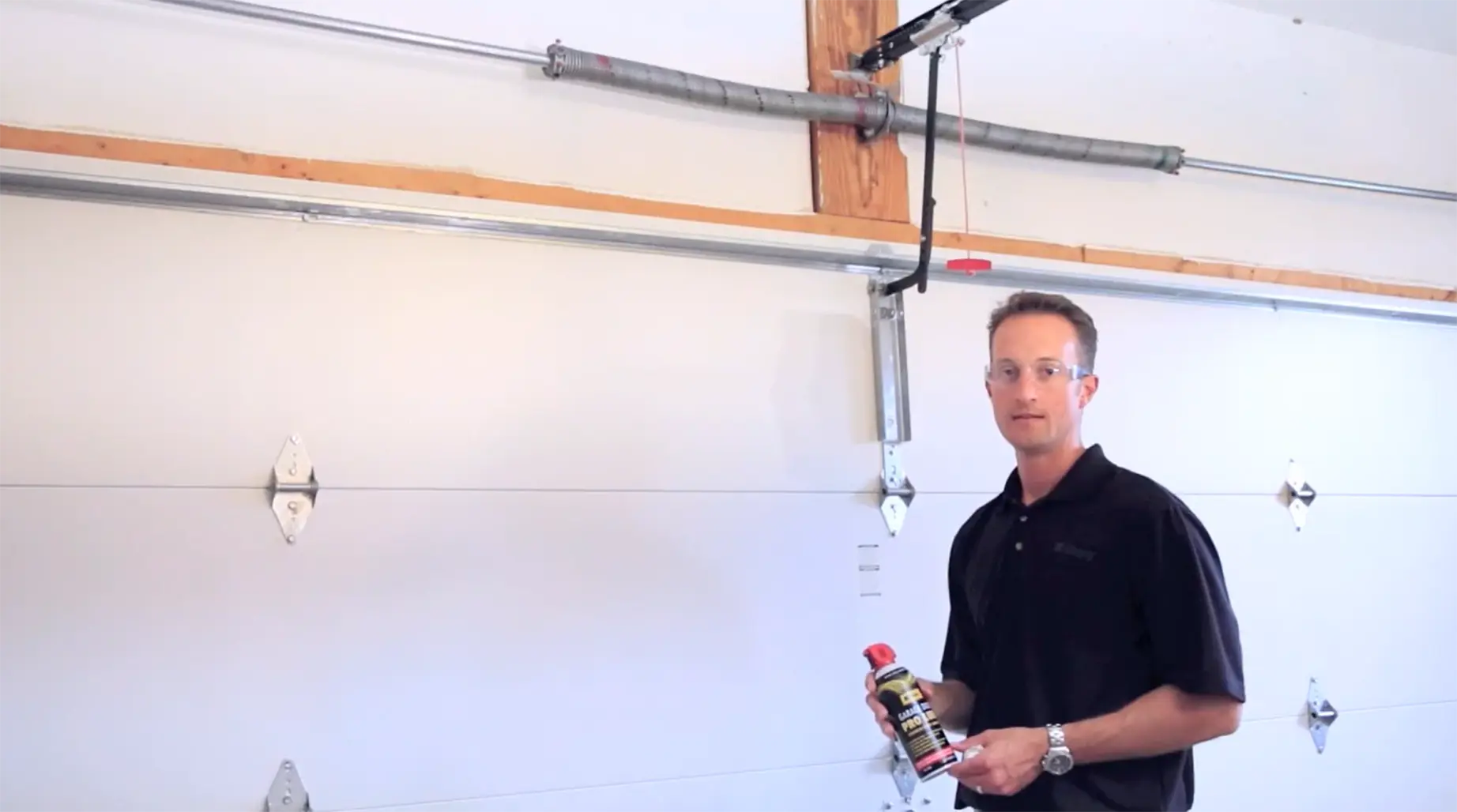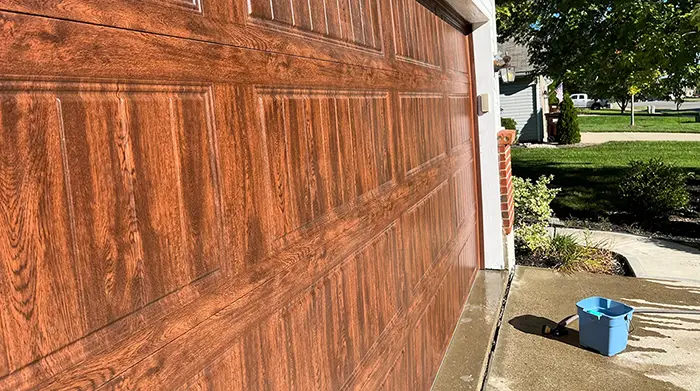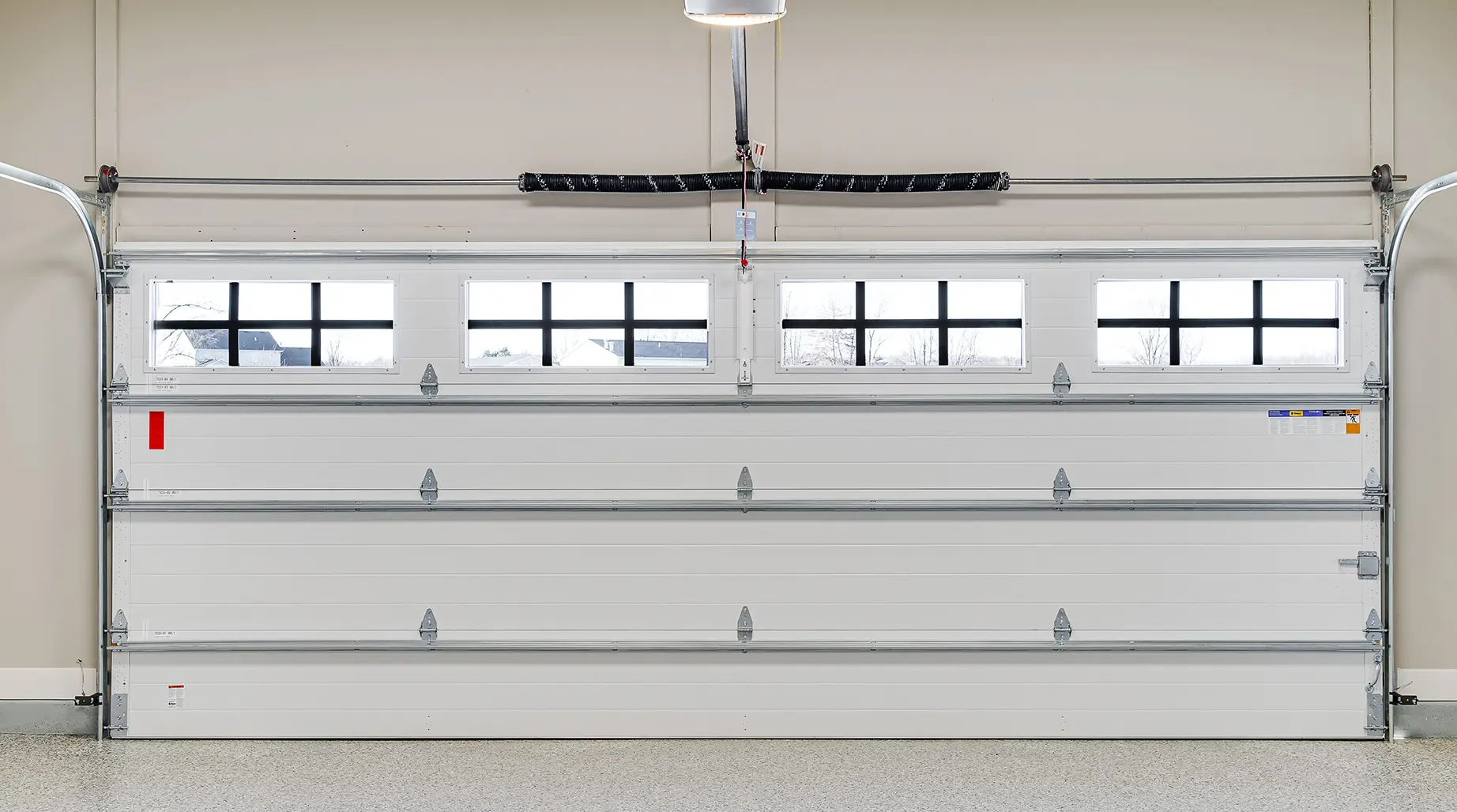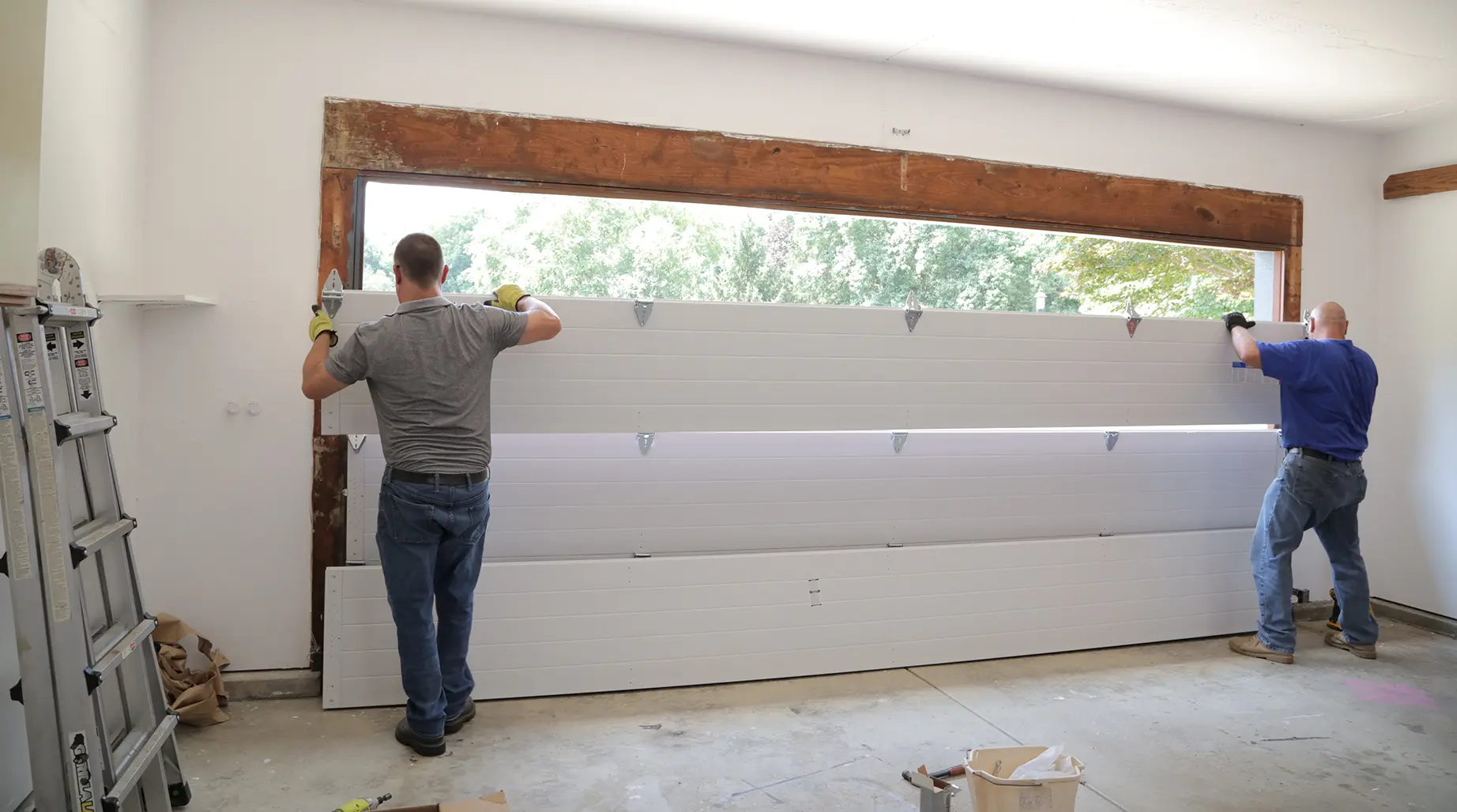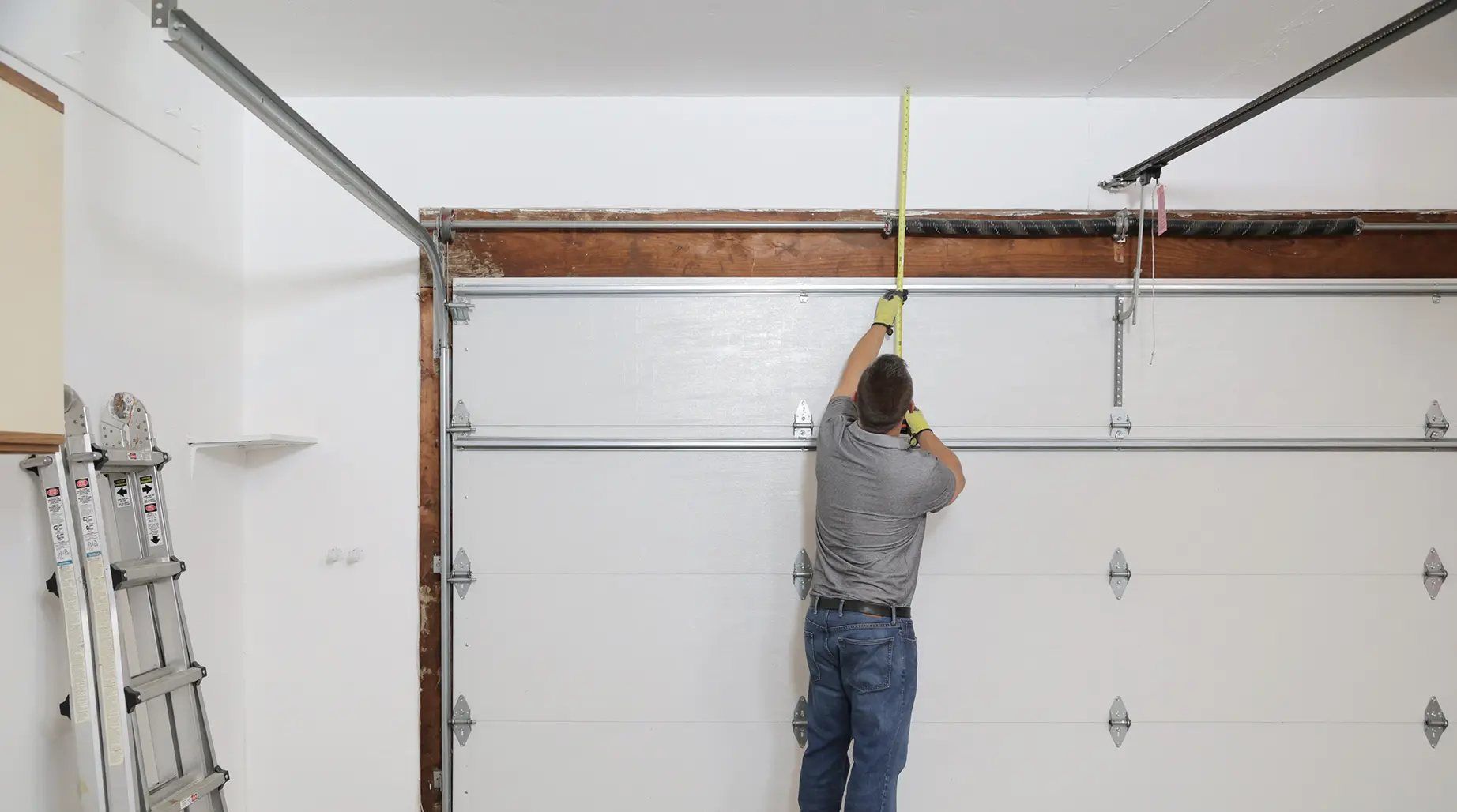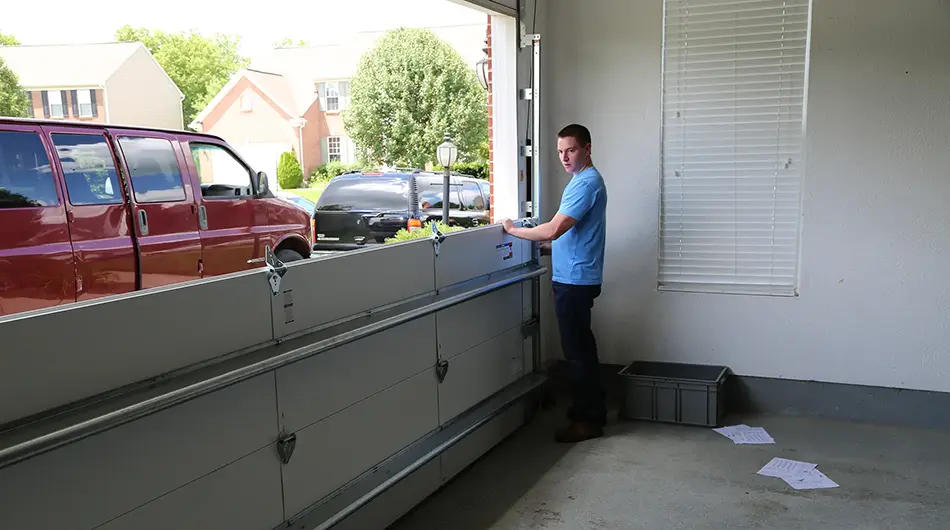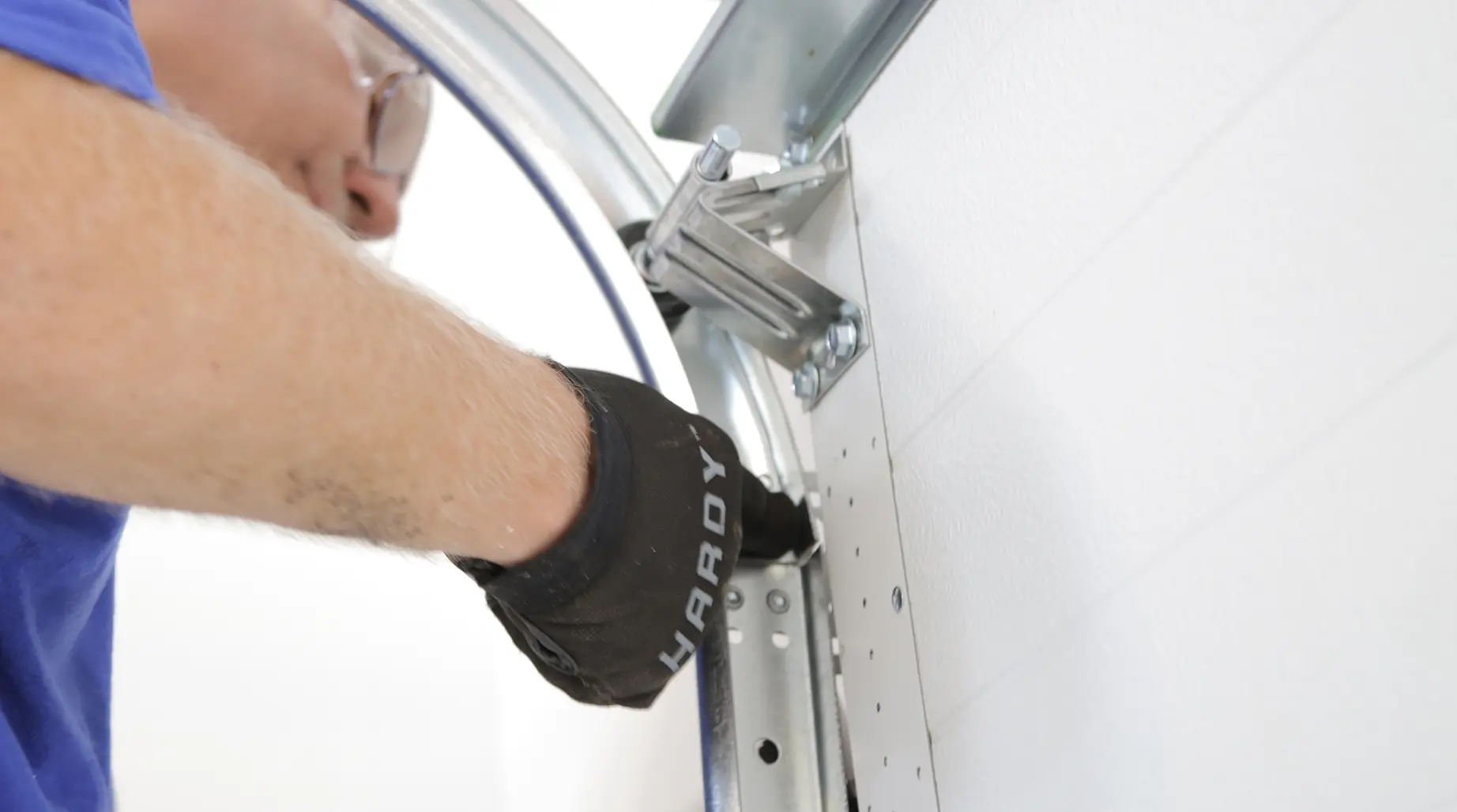



















Hinges on the end stiles perform two additional tasks: 1. They are designed to support the roller on which the the garage door travels. 2. They are offset to provide a flush fit to the garage door itself when in the closed position.
L
Lift Clearance
Refers to track hardware that causes the garage door to rise vertically some distance before leveling out into a horizontal position. Also known as "High Lift Track," Lift-Clearance is the distance above the top of the garage door opening to the underside of horizontal tracks.
Lift-Handle
A handle, normally on the bottom section of the garage door, to assist in manually lifting the sectional door.
Lites
Frames glazed with glass or clear plastic. The number of panels in a section limits the quantity of lites that can be installed. May be double glazed for insulation value. See "Full Vision Section."
Low Headroom
Track hardware accessories to improve garage door installation with minimum headroom conditions.
M
Master Keying
Arrangements whereby cylinder locks, although fitted with different keyed cylinders, can be opened or locked by one master key. In new buildings, the hardware supplier has responsibility for the lock cylinder and the locking device has to be coordinated with the hardware supplier. Cylinder may be furnished by this supplier and changed in the field. (Commercial garage door application)
Meeting Rail
The top or bottom horizontal rail in any section that meets and joins with an adjacent garage door section in horizontal rail.
Mounting Plates
Flat steel or wood members placed on the wall to accommodate spring support, spring shaft bearings, chain hoists and mountings for operators.
Movable Center Post
A lightweight extruded aluminum post/track assembly, which substitutes for the jamb between two adjacent garage doors and can be released and carried from the opening. (Commercial garage door application)
Mullion
A slender dividing bar between two garage doors. Usually designed to carry horizontal (wind) load but not vertical load. (Commercial garage door application)
Muntin
A bar member supporting and separating panes of glass within a sash or door.
N
NEMA
National Electrical Manufacturers Association. Established to provide standards for electrical components. Number designation refers to motor operator and controls to meet the ambient requirements.
O
Opening Size
Frequently called daylight opening or finished opening. Dimensions are taken between masonry or wood walls or between steel jambs.
Opening Width
Distance between jambs of the garage door opening.
Outside Hook-up
Bottom fixture with an arm that bends around vertical track to receive lifting cables. Generally used with low headroom hardware.
P
Padding
Refers to the wood framing at jambs and header to which the garage door track is mounted. Usually furnished by general contractor. See "Jambs."
Pane
The area between vertical stiles in a garage door section.
Pass Door
Sometimes called wicket door or access door. It is a small swing door built into the larger upward acting garage door allowing people to walk in and out without opening the large door. Cannot be used as a legal exit. (Commercial garage door application)
Pedestrian Door
Access door adjacent to the upward acting garage doors. Avoids the use of a sectional door as a legal egress. (Commercial garage door application)
Perimeter Seal
Complete weather-stripping package for sectional garage doors, consisting of astragral, jamb seal and header seal.
Perimeter Wearstrip
Vinyl or felt attached to corrugated sheet door curtain to prevent rubbing. Located at the ends or drum locations.
R
Rabbeted Joint
Joint formed by connecting rails with grooves cut out in opposing edges to permit overlapping weathertight meeting of sections. See "Shiplap Joint" and "Tongue-and-Groove."
Radius
The curved portion of the track, which allows the door to move from vertical to horizontal (and vice versa). The curve is measured in inches, thus determining headroom requirements. See "Headroom."
Rain or Water Stop
A step at the edge of the garage floor, approximately 1" (25.4 mm) higher than the outside finish. The garage door sits between the two.
Rear Track Hangers
Often constructed of punched angle iron, laterally braced, these hangers attach the end of the horizontal track to the garage ceiling. See "Back Hangs."
Removable Post
Designed to allow the use of two or more garage doors in a single opening with center posts that can be removed when doors are raised. Especially desirable where small openings are required normally, but occasionally the entire clear opening is necessary. (Commercial garage door application)
Reverse Angle Mounting
An exceptionally sturdy method of track mounting used on all steel jambs and wood jambs at the architect's direction. See "Angle Mounted Track." (Commercial garage door application)
Roller Assembly
The combination of a wheel and axle that is used to guide a garage door through the track system, either 2" (50.8 mm) or 3" (76.2 mm) diameter, depending on track size. Available as short or long stem.
Rollers
Steel, ball-bearing wheels or nylon rolelrs that allow sections to roll freely along garage door tracks.
RSLO/LSLO
Right side looking out/left side looking out. Used to indicate hand of chain hoist or electric operation or lite or exhaust port location. (Commercial garage door application)
S
Safety Spring Containment
An extra cable used with garage door extension springs to prevent it from causing damage or injury if the spring breaks. The cable is threaded through the center of the spring and is secured on both ends of the horizontal track.
Sectional Joint Meeting Rail Seal
An integral weather-strip with the section at the joints between garage door sections.
Sectional Garage Doors
Garage doors made of two or more horizontal sections hinged together to provide a door large enough to close the entire opening. Sectional doors are guided into the horizontal or open position by a system of vertical or horizontal tracks. May be fabricated of continuous roll-formed steel with reinforcing ribs or flush sections of steel or aluminum.
Shaft Bearings
Type of bearing that adequately supports the radial forces dictated by the weight of the counterbalance assembly and door weight, and the lateral forces exerted. See "Center Support Bearing."
Shafts, Tubular and Solid
A tubular or solid steel counterbalance shaft transmits the lifting force of the torsion springs to the cable drums and lifting cables.
Sheave
A pulley with integral ball bearings designed to handle a cable. Used to control the movements of the cables employed in the garage door counterbalance system. Various types are stud or clevis.
Shiplap Joint
The configuration of the meeting rails. When closed, the shiplap prevents rain, wind, and light from infiltrating the garage door between the door sections. See "Tongue-and-Groove."
Sideroom
A horizontal measurement from each side of the garage door opening outward along the wall to the nearest obstruction within the building.
Spring Anchor Plates
Designed to transmit torque from the stationary end of a torsion spring to the building structure and, at the same time, support the weight of the torsion shaft in a level attitude. The anchor plate is able to withstand the lateral forces exerted by a torsion spring. Usually supplied by the general contractor. See "Center Support Bearing."
Spring Assembly
Hardware used to make up the garage door counterbalance assembly.
Spring Bumper
Small spring-cushioning bumper attached to the horizontal track, which stops the door at the full open position. (Commercial garage door application)
Spring Fittings
The sleeves or cones that are used to affix the torsion springs to the torsion shaft. One piece is a stationary sleeve or spring retainer, and the second piece is an adjusting cone or winding sleeve.
Steel Jamb Mounting
Continuous angle attached to vertical track and fastened to the jamb by welding, self-tappers, or bolts. (Commercial garage door application)
Steel Jambs
Door framing made from either channel or angle iron.
Stop Molding
Seals the perimeter of the garage door against weather and light infiltration. Stop molding is nailed to the jamb, outside the door, and is incorporated as one of the final steps in the installation process. Sometimes called doorstop, it is usually wooden or plastic.
Stop Bars
Bars or brackets mounted at the top of guides to prevent bottom bar from traveling out of the guides when the sheet door curtain is fully raised. (Commercial door application)
Straight Incline Track
Vertical track assembly that extends from floor to twice the height of the opening without break-away feature. See "Break-Away Track." (Commercial garage door application)
Struts
L-shaped metal reinforcement members attached horizontally to the inside of the garage door section to add strength and rigidity. Struts are necessary on wide heavy garage doors to help prevent sagging and bowing and to provide additional reinforcement to comply with the required windloading. Also called trusses.
Swing-Up Post
See "Removable Post."
T
Tongue-and-Groove
The configuration of the meeting rails that differs from shiplap in having matching channel groove and protrusion on the longitudinal edges of the abutting meeting rails for wind and weather protection.
Top Fixture
Adjustable brackets that carry track rollers mounted on the top corners of the garage door's top section.
Top Header Seal
Flat weatherstrip fastened along the full width of top door section as a seal along the header.
Top Rail
The horizontal rail forming the top horizontal member of a garage door as distinguished from the meeting rails and bottom rail.
Top Seal
Weatherstripping that fastens to the top of the garage door generatoing a seal along the top of the opening.
Torque
The turning effect of a tangential force acting at a distance from the axis of rotation or twist; torsion springs apply such effect to spring shafts.
Torsion Shaft
The shaft of a torsion spring assembly that transmits the lifting force of the torsion springs to cable drums and lifting cables.
Torsion Spring Counterbalance Assembly
Designed and constructed to provide a safe and durable conversion of spring torque to lifting force by balancing the weight of a sectional overhead garage door.
Torsion Springs
Mounts above the garage door opening. The springs are manually wound, or charged, then set to a shaft that runs through the spring. The spring turns the shaft, which raises or lowers the door via the cables winding on drums.
Track
Provides a guide for the roller wheels. The vertical track is mounted to the jambs with brackets on each side of the garage door opening. The horizontal track contains a curved end called the radius (See "Radius"). In the closed position, the garage doors rest in the vertical track. In the open position, the garage doors suspend from the horizontal track. Sectional door track usually consists of two vertical pieces and two horizontal pieces.
Trajectory
The arc of travel, or sweep of the top section, as the garage door is raised from closed to open position. Determining the trajectory is important when planning the location of pipes, light fixtures, etc.
V
Vertical Lift
A hardware design that allows a sectional garage door to open vertically along the wall above the door opening without turning back inside the building. (Commercial garage door application)
W
Wicket Door
Hollow-metal pedestrian door installed adjacent to the sheet door that shares the same building opening. (Commercial garage door application)
Winding Bars
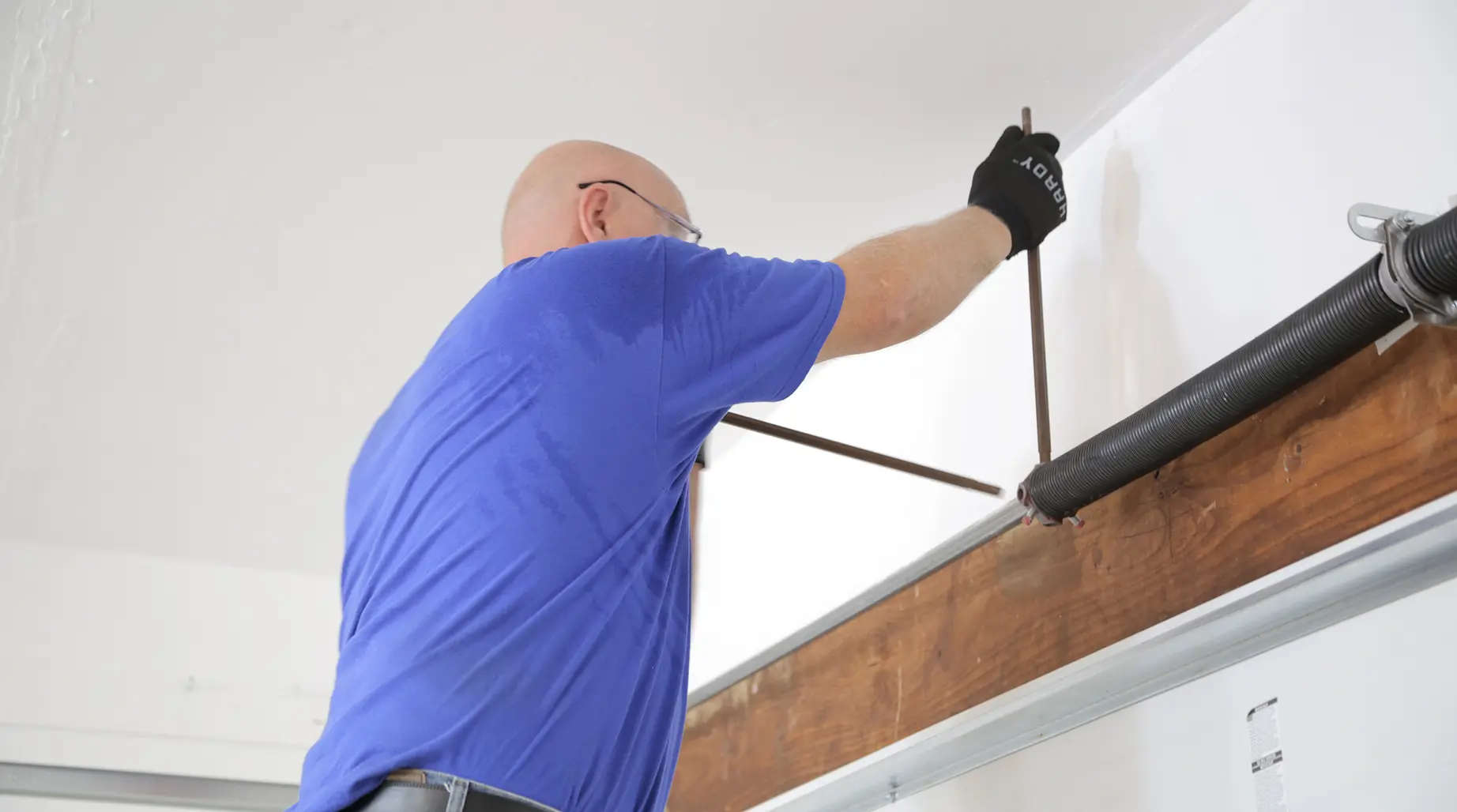
Used by garage door installers to set initial tension on torsion springs at the winding cones.
Winding Cone
Part that fits into a torsion spring, permitting winding of the torsion spring and tension adjustment.
Winding Sleeves
Designed to safely allow the application of torque from a torsion spring. The winding sleeves' design properly retains a torsion spring when fully wound or unwound and withstands the radial and lateral forces exerted by the torsion spring.
Windload
The lateral force that the wind exerts upon a garage door as it stands in a closed position.
Wood Jamb Mounted Regular method of mounting vertical track to wood jambs.
Wood Jambs
Upright wooden piece forming the side of the garage door opening.