Article Summary:
High winds don't have to be a worry when you have the right garage door. Wind-resistant doors are rated with a "W" number; the higher the rating, the stronger the protection. To find the right door for your home, you'll need to determine three things: your area's required wind speed, your exposure level, and whether you have a one or two-story home. These factors combine to give you a design pressure rating that tells you which WindCode® door to choose. Clopay's Storm Ready™ models are built with reinforcement inside the door structure, so you simply lock it when a storm approaches, no advance setup or removal needed. This is especially handy for vacation homes or rental properties. Professional installation is recommended due to code complexity, and it's worth checking with your insurance company too, as they may have specific requirements. Read this post to learn how having the right door in place, you can help you weather any storm with confidence.
When high winds and stormy weather are on the forecast, the last thing you want to worry about is your home's largest moving part—the garage door. But how can you be sure your door is up to the challenge? Clopay® makes it simple to protect your home and family. With a straightforward product selection guide and their specially designed WindCode® garage doors, you can easily find the right level of protection for your specific area. It all comes down to a simple "W" rating: the higher the W, the stronger the door.
Factors to Consider When Choosing A Reinforced Garage Door

Canyon Ridge® 5-Layer garage door in Design 11 with REC13 windows in Medium Finish
- Research the wind load requirements for your geographic region and make sure your garage door meets them. The local building code authority can provide current information and a professional garage door technician can perform an on-site inspection.
- Know your garage door, even if you didn't buy it. If you have recently moved into a new residence and did not purchase the garage door currently installed on your home, have a garage door professional inspect it to ensure it is the appropriate model for your area. Also, have them demonstrate how to secure the garage door during a storm.
- Understand Storm Ready™ vs. "add-on" reinforcement. Two kinds of reinforced garage doors are available in the marketplace. With the "add-on" system, a homeowner must install long posts in the floor and ceiling to reinforce the garage door before the storm hits, and then remove them again afterwards to resume normal operation. Clopay’s Storm Ready™ models require no advance set-up. Reinforcement is contained within the structure of the door and is engaged by simply locking it - a timesaving convenience in the event of an evacuation notice or unexpected high wind event. This type of garage door is particularly beneficial to vacation home and rental property owners because they have peace of mind knowing that the garage door is secure as long as it's locked.
- Retrofitting an older garage door with new hardware will not provide the structural support needed for the new building codes.
- You can have safety in style. A reinforced garage door doesn't necessarily mean barricading the garage opening in a solid sea of steel. Clopay offers code-compliant carriage-house style garage doors and impact resistant windows.
- Style inside and out! - Clopay is converting doors to our newly patented Tapered Strut or "T-Strut" design. This design is cleaner, less bulky and easier to install than previous technologies.
- Storm Ready™ - Clopay's doors are ready for the storm. Simply close and lock your door! No need to install a post or pins. This is not only a time saver, but could be a life and home saver if an unexpected wind even occurs.
Step 1: Determine Your WindCode® Rating
Determine the minimum wind speed (MPH) your door must meet or exceed from the map. This map is to help determine your "W" rating, and should be used as a guideline only. Contact your local building code official to determine the proper wind load requirements in your area.
If you live in Florida, please refer to the Florida WindCode® Door Page.
Step 2: Determine if your home is in an Exposure B, C or D region
Exposure B: Urban and suburban areas, and wooded areas
Exposure C: Flat open country and grasslands
Exposure D: Flat unobstructed areas and water surfaces, including hurricane-prone regions
Step 3: Determine the structural type of your home

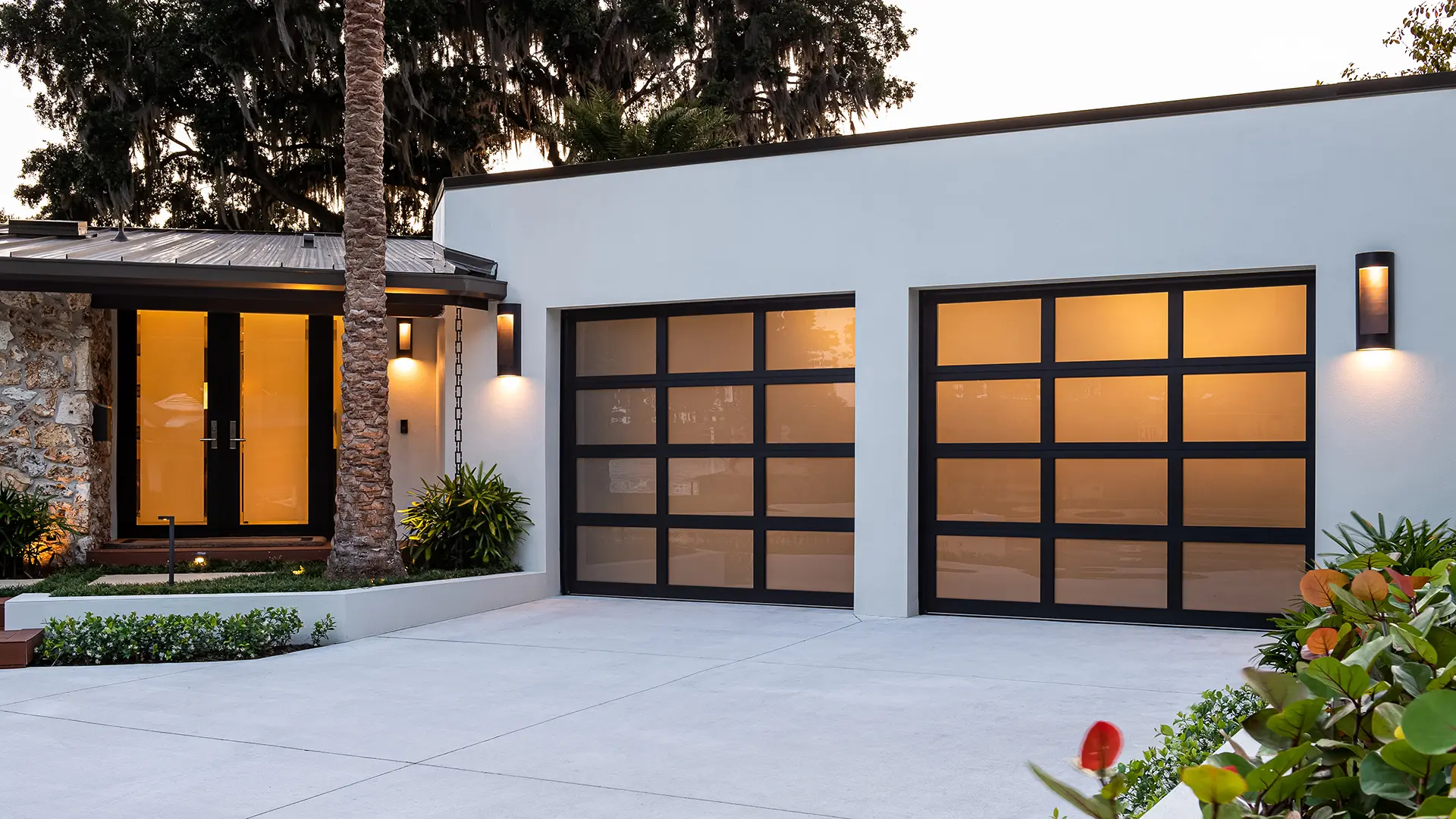
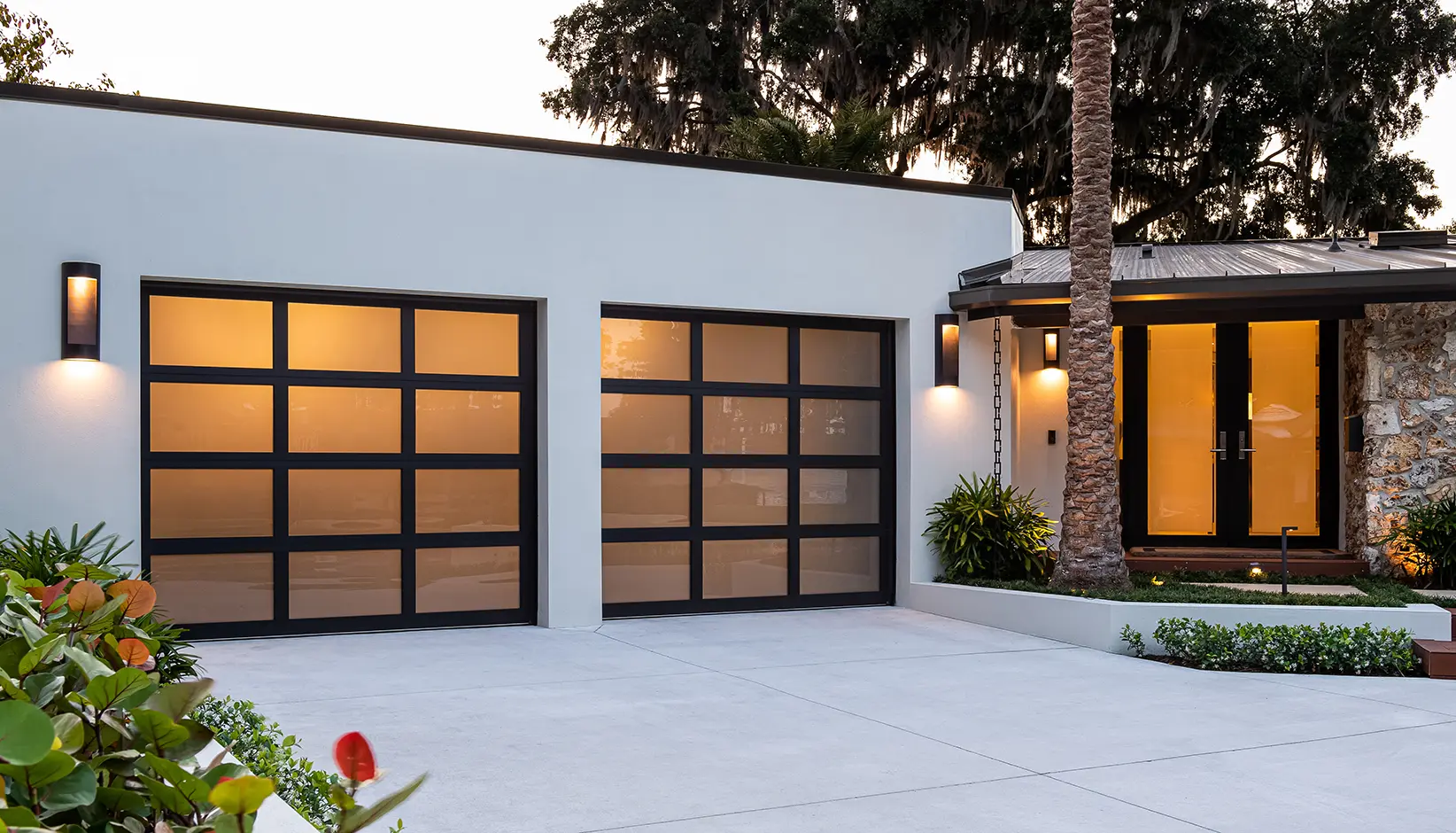
Canyon Ridge® 4-Layer garage door in Design 11 with REC14 windows. Photo courtesy of Studio512
Determine the structural type of your home. Is it a one story or two story home?
Due to the complexity of installing WindCode garage doors, meeting codes and pulling permits, we highly recommend professional installation.
Step 4: Find Your WindCode Door W Rating
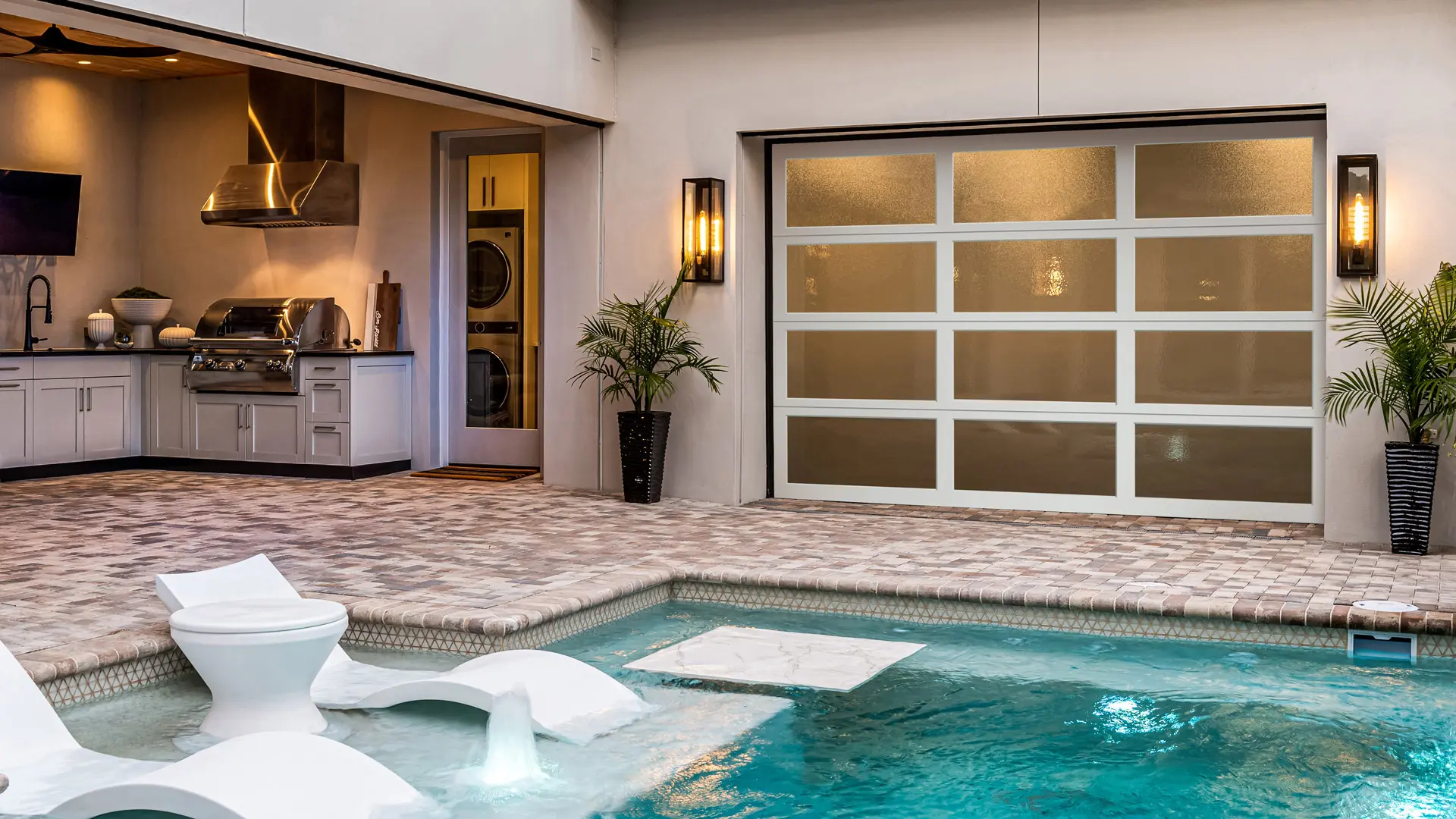
Avante® garage door with black anodized frame, frosted glass panels and black powder coated hardware and track
Using wind speed (MPH), exposure and structural type, find your required design pressure and WindCode® door "W" rating in the charts below.
Note: It is important to also contact your homeowner's insurance company. Many insurance companies may require or encourage doors that are different than required by building code.
Design Pressures
The design wind load pressure rating of a door is expressed in PSF (pounds per square foot). The design pressure of the door must equal or exceed the design pressure for the garage door opening in which a door is to be installed. Design pressure has positive and negative values as shown in .
Windcode® Door Related Terms
ASTM E330
The testing standard used in the garage door industry. Also known as uniform static air pressure testing. This standard was developed by the American Society for Testing and Materials (ASTM) to allow products to be measured in air pressure chambers. ASCE7 Design standard developed by the American Society of Civil Engineers titled "Minimum Design Loads for Buildings and Other Structures". Section 6 of this standard deals with wind loads.
ASCE7
Is the basis for wind load calculations used in most building codes.
International Building Code
Model building code developed by the International Code Council. Most of the U.S. has adopted this building code (sometimes with slight, locally adopted variations. The wind load provisions in this code specifically call out ASCE7 to be used in wind load calculations.
Design Pressure
The measurement of resistance in both positive and negative directions that a garage door system must withstand. Design pressures are usually expressed in both positive (PSF+) and negative (PSF-) values. Also known as design load.
Test Pressure
The actual tested wind pressure resistance that a garage door system will withstand during laboratory testing. Most building officials require that the test pressure be equal to 150% of the design pressure. Also known as test load.
Three-Second Gust
How wind is measured by the National Weather Service. This data is then compiled into wind maps incorporated into ASCE7 and the International Building Code. The wind speed maps are based on a yearly 2% probability of occurrence (50-year average peak wind).
Mean Roof Height
The height above grade level of the midpoint of the roof. Mean roof height is calculated by averaging the eave and ridge heights, and is used as part of design pressure calculations in both ASCE7 and the International Building Code.
Wind Velocity
The actual measured speed of airflow during a wind event; usually expressed in MPH. Wind velocity is typically measured at 33 feet (10 meters) above ground level at airports and similar open country locations.
WindCode®
The registered name for all Clopay garage door products designed and tested to comply with wind resistance requirements of local, state, and national building codes. The WindCode® program includes engineering, marketing and sales programs designed to help Clopay customers understand code issues and determine the best garage doors for their specific geographic area.
Helpful Links
Product Evaluation Index from Texas.gov
Texas Coastal Wind Load Requirements