Guide to Garage Door Openers
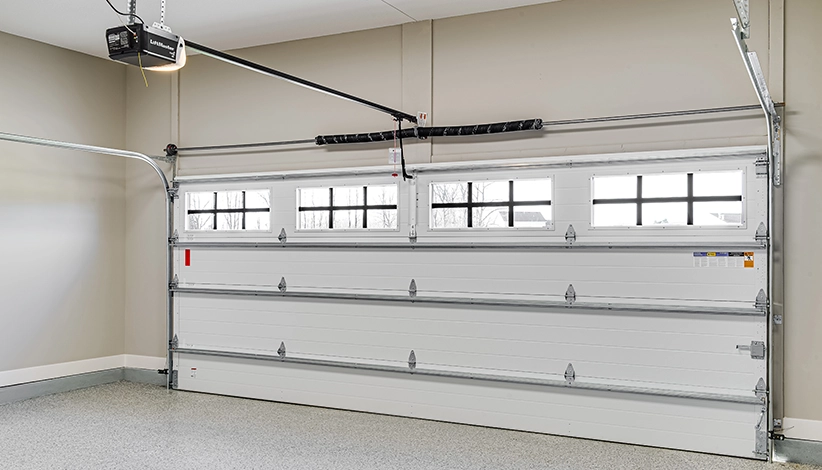
LiftMaster® is a registered trademark of The Chamberlain Group. All rights reserved
Choosing the right garage door opener isn’t just about convenience—it’s about finding the best match for your home and routine. When you buy a new garage door, an opener isn’t automatically included, so it’s important to consider your options. Sometimes you’ll need to replace your automatic garage door opener before the door itself, or vice versa. This guide covers what homeowners need to know about garage door openers, including the different types, smart garage door opener features, and how to pick the right horsepower. Whether you’re shopping for a new electric garage door opener or upgrading an old one, we’ll help you weigh your options.
Automatic garage door openers have become a staple for homeowners who want an easier, safer way to use their garage. The biggest draw is convenience: with a push of a button—or a tap on your smartphone—you can open or close the garage door without stepping outside or leaving your vehicle. Many smart garage door openers now offer remote access and app controls, making it possible to monitor or operate your garage from anywhere.
Lighting is another major benefit. Most electric garage door openers come with built-in LED lights that illuminate your garage as soon as you walk in or arrive home. Some models even offer motion-sensor lighting, so you’re never fumbling for a switch in the dark.
Safety and security features have also advanced—today’s garage door openers include automatic reversing mechanisms that help prevent the door from closing on objects or pets. There’s also rolling access codes that change each time you use the remote, which help to protect against break-ins. And for anyone with limited mobility, auto garage door openers are far safer and simpler than lifting a potentially heavy door by hand.
Every garage door opener has a few key parts that work together to lift and lower your door, but the heart of the system is the opener. This is the main unit mounted above or beside your garage door, and it houses the motor and gears that actually do the heavy lifting.
Most automatic garage door openers use either an AC or DC motor. DC motors are becoming more popular because they’re quieter, offer smooth soft start and stop movements, and can support battery backup systems, which come in handy during power outages.
The drive mechanism is what connects the operator to the trolley, which moves back and forth to raise or lower your door. A chain drive garage door opener uses a metal chain for reliable performance—though it can be a bit noisy. A belt drive garage door opener swaps the chain for a rubber belt, making operation much quieter. Screw drive openers use a threaded steel rod instead, offering a good balance of power and speed. Choosing the right drive type depends on your priorities, whether it’s noise level, durability, or cost.
When shopping for a new garage door opener, it’s important to consider their strengths and best-use scenarios.
Chain drive garage door openers are classic for a reason. They use a sturdy metal chain to move the door up and down, making them the most budget-friendly option for many homeowners. Thanks to their durable build, chain drive garage door openers can easily handle heavy or oversized garage doors. The main drawback is noise—these openers tend to rattle and hum, especially during operation. That’s why they’re often recommended for detached garages where noise won’t be an issue.
Belt drive garage door openers swap out the chain for a reinforced rubber belt, resulting in much quieter operation. This makes them a top pick for attached garages or situations where bedrooms are located above the garage. Belt drive models deliver smooth, minimal-vibration performance, and the lack of metal-on-metal contact means less wear over time. On the flip side, they’re generally more expensive than their chain-driven counterparts, but many homeowners find the quiet performance worth the extra cost.
Screw drive garage door openers use a threaded steel rod to move the trolley. These openers are known for their compact size and straightforward design, which translates to fewer moving parts and lower maintenance requirements. Screw drive openers offer plenty of power and reliable operation, making them a solid option for most standard residential doors. One thing to note: they can be more sensitive to extreme temperature swings, which may affect performance in very hot or cold climates.
Wall mount garage door openers—also called jackshaft openers—are installed on the wall beside your garage door instead of on the ceiling. This space-saving design is perfect for garages with high ceilings, low headroom, or ceiling storage that might otherwise get in the way. Wall mount openers operate quietly and keep the ceiling clear for extra storage or a cleaner look. The main tradeoff is that they usually come with a higher upfront cost compared to ceiling-mounted models.
Many of the above are now considered smart garage door openers bring technology into the mix. These electric garage door openers connect with smartphone apps, allowing you to control and monitor your garage door from just about anywhere. You can get alerts if the door is left open, grant remote access to guests, and even integrate with home automation systems for added convenience. Smart features are becoming standard in many new auto garage door openers, providing both peace of mind and extra security for busy homeowners.
Selecting the right garage door opener is about matching your needs with the right features and capabilities. If you’re unsure about which opener to buy, you should talk to a professional garage door installer.
One of the first things to think about is noise. If your garage is attached to your home or located near living spaces, noise can quickly become an annoyance. In these cases, a belt drive garage door opener or a wall mount garage door opener is your best bet. Both options offer smooth, quiet operation that won’t disrupt your household, making late-night arrivals or early departures much less intrusive.
Power is another important factor. Garage door opener horsepower should match the size and weight of your garage door. For a standard single or double garage door, a 1/2 HP electric garage door opener usually does the trick. But if you have a larger, heavier, or insulated door, it’s smart to step up to a 3/4 HP or even 1 HP model to ensure reliable, long-lasting performance without straining the motor.
Basic remote controls and keypads are standard, but many homeowners now look for battery backup systems so the opener still works during power outages. Smart garage door openers take convenience to the next level, allowing you to control and monitor your door from a smartphone app, receive alerts, and even connect the opener to your home automation system.
Don’t forget about door height. Most garage door openers are designed for a standard 7-foot-tall door, but many homes have 8-foot or taller doors. In these cases, be sure to select the correct rail extension kit or specify the proper rail length when ordering. This ensures your garage door opener can fully open and close the door without any issues.
When you weigh these factors—noise, power, features, and proper fit—you’re more likely to end up with a garage door opener that works seamlessly with your home and makes every day just a little bit easier.
Installing a garage door opener can be a rewarding project for homeowners who are comfortable with tools and have solid experience tackling home improvement tasks. If you want to handle the installation yourself, be sure to work only with an automatic garage door opener that comes with detailed instructions and follow each step closely, strictly adhere to all warnings and safety precautions, and make safety your top priority. Remember, working with heavy doors and electrical components always carries some risk, so exercise extreme care at all times and don’t cut corners. Finally, if you’re ever unsure about an installation step or safety precaution, immediately contact the opener manufacturer or talk to a professional garage door installer.
Given all of the above, there are real advantages to choosing professional installation. Trained technicians bring the expertise and experience needed to set up all types of garage door openers, from chain drive and belt drive models to wall mount and smart garage door openers. A professional will ensure your opener is installed correctly, make precise adjustments for smooth operation, and test all safety features. Plus, many manufacturers require professional installation for warranty coverage, protecting your investment for years to come.
If you’re unsure about tackling the job yourself, consider connecting with a trusted installer. You can find a professional in your area using Clopay’s dealer locator, making it easy to get your new garage door opener installed and running safely.
Keeping your garage door opener in good shape doesn’t take a lot of time, but regular maintenance goes a long way toward ensuring reliable performance and long life. Start with a simple inspection every few months. Look over the main components of your automatic garage door opener—like the chain or belt, rail, and mounting brackets—for any signs of wear, rust, or damage. Addressing small issues early can prevent bigger problems down the line.
Lubrication is key for smooth operation. Apply a silicone-based lubricant (do not use WD-40) to the moving parts such as the chain or belt and the rail. This reduces friction, minimizes noise, and helps prevent premature wear on your garage door opener’s drive mechanism.
Don’t forget about the safety sensors. These small devices, located near the bottom of the door tracks, stop the door from closing if something is in its path. Wipe them clean with a soft cloth to keep them free of dust, cobwebs, and debris that could interfere with their operation, making sure not to move them out of alignment with each other.
Finally, check all the hardware—bolts, screws, and nuts—every so often. Tighten anything that has become loose due to regular use or vibration. Regular maintenance is the simplest way to keep your electric garage door opener running smoothly year after year.
Choosing the right garage door opener brings everyday convenience, safety, and reliability to your home. For more details or personal guidance, connect with an expert by finding a Clopay dealer near you.
Need more garage door advice?